Garden Trimming Fulfills Fence: Melbourne Style Ideas
A yard edge can appear like a small detail up until you notice exactly how it makes every little thing else act. Walkways sit cleaner, mulch stays, cutting comes to be much less of a presuming video game, and the whole yard reviews as intentional instead of "whatever was here previously." In Melbourne, where periods can flip promptly and dirt can differ substantially across residential areas, edging and fence also collaborate as one design system. Obtain the sign up with right and you can make even a modest block really feel ordered and silently confident.
I have actually seen the distinction on real properties: the ones where the fencing line, the garden border, and the course levels all make sense at the same height or with a calculated step, and the ones where they do not. When edging is treated as a second thought, you end up with plunged borders, weeds that locate the voids, and fence messages that end up being maintenance hotspots. When it's treated as part of the landscape build, you obtain crisp lines and fewer problems down the track.
Below are practical Melbourne style ideas that connect yard edging with fence, including what to expect around drainage, slopes, and products. I'll likewise flag the usual compromises I have actually observed when house owners work with fence companies Melbourne, especially when collaborating trades across landscaping, fence, and paving.
The sign up with matters: why bordering and fencing ought to be developed together
Fencing specifies borders, yet edging defines the experience in between. With each other, they mount views, control where soil goes, and set the "rhythm" of the yard. If your edging runs right and your fencing line adheres to a different placement, the eye catches it every time you move across the backyard. If the bordering rests too expensive against the fencing base, water can't drop correctly, and you get wetness where it shouldn't be.
In Melbourne, these problems turn up more often since many buildings have several of the following:
- clay soils that hold water and shrink when they dry
- occasional heavy downpours that test drainage
- older preserving or border aspects that work out erratically over time
- a mix of paving levels across driveways, walkways, and inner paths
When you prepare edging with fence, you're not simply picking materials. You're setting expectations regarding water, activity, and how people in fact utilize the space.
A quick lived example from a normal website visit
One recent work involved a classic circumstance: a specialist mounted a timber fencing along a side limit, then months later on a garden enthusiast added yard beds with an attractive steel bordering strip. The steel looked neat when it was initial mounted, yet it rested a little also near to the lower rail and produced a slim walk where fine dirt gathered. After a damp spell, the walk entraped dampness against hardwood and plants began to overreach the side. We regraded the top of the edging, changed plant spacing, and relocated the boundary line by a small amount, about the size of a spade, to develop a clean drainage course. The fence stopped staying wet, and the yard quit "spilling" into the walkway area.
Nothing remarkable took place. The materials were great. The layout and degrees were the problem.
Start with the line: choosing a bordering design that fits your fencing
Different fencings develop different darkness, sightlines, and upkeep demands. Your edging must match that individuality. A sleek steel or concrete fence checks out in different ways from a rustic lumber paling, and the bordering ought to either enhance that look or soften it.
Timber fences pair well with "natural" edging
Timber paling and paling-style fences typically look best with edging that feels based. Think about:
- timber sleeper edging (used thoughtfully, not stacked arbitrarily)
- brick soldier bordering that appears like a continuation of the existing garden brickwork
- stone bordering that mirrors nearby hardscape
The objective is to develop a constant "frame" for the yard. If your fence is cozy and responsive, harshly shiny edging can feel detached unless you intentionally style contrast.
One trade-off: lumber edging can rot if it remains perpetually wet. That's why the sign up with to a fence base issues a lot. Where the fencing messages gather water, keep bordering heights and dirt build-up in check.
Colorbond and modern fences can manage sharper borders
For modern-day styles like Colorbond, aluminium slat fences, or provided panel systems, sharper bordering usually looks right. Slim steel boundaries, concrete edging, or clean-cut stone edging can make the yard really feel architecturally crisp.
But there's a useful note: sharp edging can enhance disproportion. If the ground dips, a crisp border will reveal every wave. This is where excellent base preparation and alignment deserve paying for.
Rendered walls and fencings need waterproofing thinking
Where a border wall surface or made fencing system runs beside beds, bordering becomes part of the water management. If you load compost and dirt high against the wall surface, you can produce consistent moisture. Rather, go for an intentional splitting up, keep mulch thickness sensible, and stay clear of creating "dish" effects where water collects.
Even if you're not waterproofing a wall like a cellar, you ought to deal with the fence boundary as a water-sensitive zone.
Height and degree: the detail that quits mulch from escaping
One of one of the most common edging mistakes I see is choosing the appropriate material for appearances, after that mounting it at a wrong elevation. Edging that's also low stops working, and bordering that's expensive can produce a walk that urges dampness and weed seeds to settle.
A convenient method is to choose what you intend to protect and what you intend to drain pipes. If you're protecting a grass side, the bordering usually requires to sit simply sufficient above the bordering ground to maintain mulch from drifting. If you're safeguarding a planting bed, you require adequate height to support the compost layer without capturing water.
On many Melbourne sites, the most effective end results originate from developing a "action" that adheres to the all-natural loss. As opposed to requiring everything level, you create a tiny, consistent grade. That permits water to relocate instead of swimming pool at the fencing line.
Where fences complicate height decisions
Fence installation can interrupt your base preparation. Blog posts get set, rails rest at a certain height, and the ground around the articles may not be best after backfilling. If your edging installation takes place after the fence, you can end up attempting to "fit" the bordering to irregular ground. If you can coordinate professions, prepare the bordering line prior to fence blog posts enter, after that confirm degrees throughout installation.
This is one area where collaborating with trusted fence companies Melbourne can aid, due to the fact that seasoned installers have a tendency to think about exactly how landscape design will certainly link later on. Still, don't presume. Ask about exactly how they set articles, exactly how they take care of ground levels, and whether they leave area for the edging base.
Drainage is not optional in Melbourne gardens
It's alluring to deal with bordering as purely structural or aesthetic, yet drain is the real job. The edging ought to assist water away from the fence base and away from locations you don't desire saturated. In Melbourne, that indicates thinking of runoff after tornados and just how soil holds water through winter.
Keep mulch away from fencing wood and fencing bases
Mulch is great for yards, yet against fences it can become an issue. Too much compost thickness right approximately a lumber fencing can maintain the base damp for longer than it should, especially if air flow is limited by growing density.

For wood fences, this can also affect just how swiftly the bottom rail or post location climates. For steel fences, mulch can still catch moisture, draw in pests, and hold organic matter versus coatings.
A straightforward general rule from garden upkeep truth: produce a clean, maintainable border area. You must have the ability to run a tube, a broom, or a weed device along that side without frequently dislodging mulch.
If you have clay soil, prepare for movement
Clay soils can swell and reduce. That motion can move edging and create gaps. Spaces are where weeds go into, and gaps are likewise where water concentrates.
This matters most when your edging directly fulfills a fencing line. If the ground drops a few millimetres gradually, you can obtain a great space in between bordering and dirt. A weed will normally discover it promptly. In technique, you can manage this by picking bordering products that tolerate slight movement and by making certain the base underneath is effectively compacted.
Material pairings that function well with typical Melbourne secure fencing styles
Rather than providing every bordering product, it's more useful to match material attributes to fencing qualities. Below are some mixes that often tend to function, plus the compromises I have actually seen.
Stone edging with wood or block fences
Stone is visually steady and ages well. When matched with hardwood fences, rock edging has a tendency to feel all-natural and solid. With brick fencings, stone can unify the scheme without completing for attention.
Trade-off: stone edging can be much more costly and needs careful installment so it sits regularly. If it's mounted unevenly, it checks out as accidental.
Concrete edging with contemporary panel fencing
Concrete borders match clean-lined fence styles. They additionally last via weather condition extremes and are much less most likely to rot than lumber edging.
Trade-off: concrete bordering can look as well "tough" if your plants are airy and fragile. The solution is planting selection and spacing. Usage textures like yards, soft fallen leave shrubs, or rounded groundcovers to balance the rigidity.
Brushed metal bordering alongside slat fences
Metal bordering can look sharp next to streamlined secure fencing. It additionally pairs well with the minimal aesthetic many house owners want.
Trade-off: steel edging tends to show setup quality. If the line is off, it looks off instantly. Metal likewise requires proper base assistance so it does not bow over time.
Sleepers with personal privacy fences
Sleepers are sensible, particularly on sloped sites where you may wish to develop a tier or retain a yard bed. They usually work well with privacy fences due to the fact that they aesthetically "thicken" the garden frame.
Trade-off: timber sleepers can shrink, spin, and eventually rot at ground call points. If you select sleepers, consider continuous maintenance and think about exactly how you will certainly refresh mulch without hiding timber.
Designing the bed shape so the fence line feels intentional
Edges aren't just about straight lines. Curves can feel much more natural, but they require more thought around base preparation, particularly if you desire compost control and weed suppression.
With secure fencing, a straight fencing line gives you a hard, straight framework. If you couple it with bent bed edges, the contrast can be striking, however you need the contours to be intentional. An arbitrary curve that doesn't "objective" at visual anchors can resemble a mistake, even if it was implied to be soft.
An approach that deals with genuine websites: choose a couple of visual supports and have your bordering react to them. For example, if you have an entrance area, align the bed edge to "stream" from eviction edge. Or if there's a path, make the bordering fulfill the path with a consistent angle so the yard boundary seems like it belongs to the sidewalk design.
A small story regarding contours that went wrong
On a slim Melbourne side backyard, a homeowner requested a curved garden bed beside a wood fencing. The purpose was good, but the curve was created after the fence was already in and after the paving level was worked out. The edging was set up to match the fencing line, but the bed shape didn't match the course overflow. After rainfall, water left the inside of the curve and resolved in a superficial pocket. We wound up changing the base and including a refined drainage loss at the contour's pinnacle. The curvature then looked right and carried out better.
Curves are worth it, but they ought to be engineered, not guessed.
Practical control: when fences and landscaping happen at various times
In numerous Melbourne builds, fence goes in initially. That's logical, but it produces control troubles if the landscaping team works later without accessibility to the original plan.
When you're taking care of fence companies Melbourne, I suggest believing in terms of handover points, not just fencings. The handover points consist of:
- where the bordering will certainly sit
- what clearance exists around fencing articles and rails
- whether the ground will be levelled or left for later landscaping
- how drain will certainly be handled at the fencing base line
If the fence installer backfills too firmly or expensive, your bordering base can wind up resting on unstable soil. If they leave way too much uneven ground, the edging becomes tough to set up cleanly. Both results create gaps and upkeep later.
If you are intending a new fence and garden border together
It helps to ask for a "final lines" check prior to any type of bordering base is mounted. Also a quick site walkthrough where you note the desired side line with string or stakes can prevent months of frustration.
Also, decide early what matters most aesthetically and what matters most almost. As an example, do you want the bordering to be flawlessly uniform in height, also if the ground is slightly unequal? Or do you desire it to follow the ground fall for drain, also if there will be refined actions? In Melbourne, drain often wins since it avoids larger issues.
Here's a short list you can really make use of throughout control:
- Confirm how fence messages are established and whether backfill will certainly be compacted and levelled
- Decide whether the edging line will certainly be right, curved, or adhere to the ground fall
- Plan compost depth and maintain organic material far from lumber fence bases
- Check drain paths after rainfall, specifically on clay or in narrow side yards
- Agree on who adjusts degrees if the site shifts after fencing installation
Style concepts that really feel Melbourne, not generic
Melbourne gardens usually lean right into texture and comparison rather than every little thing being one-note. One of the most effective bordering and fencing mixes I've seen show that.
Idea 1: picket heat fulfills clean boundary control
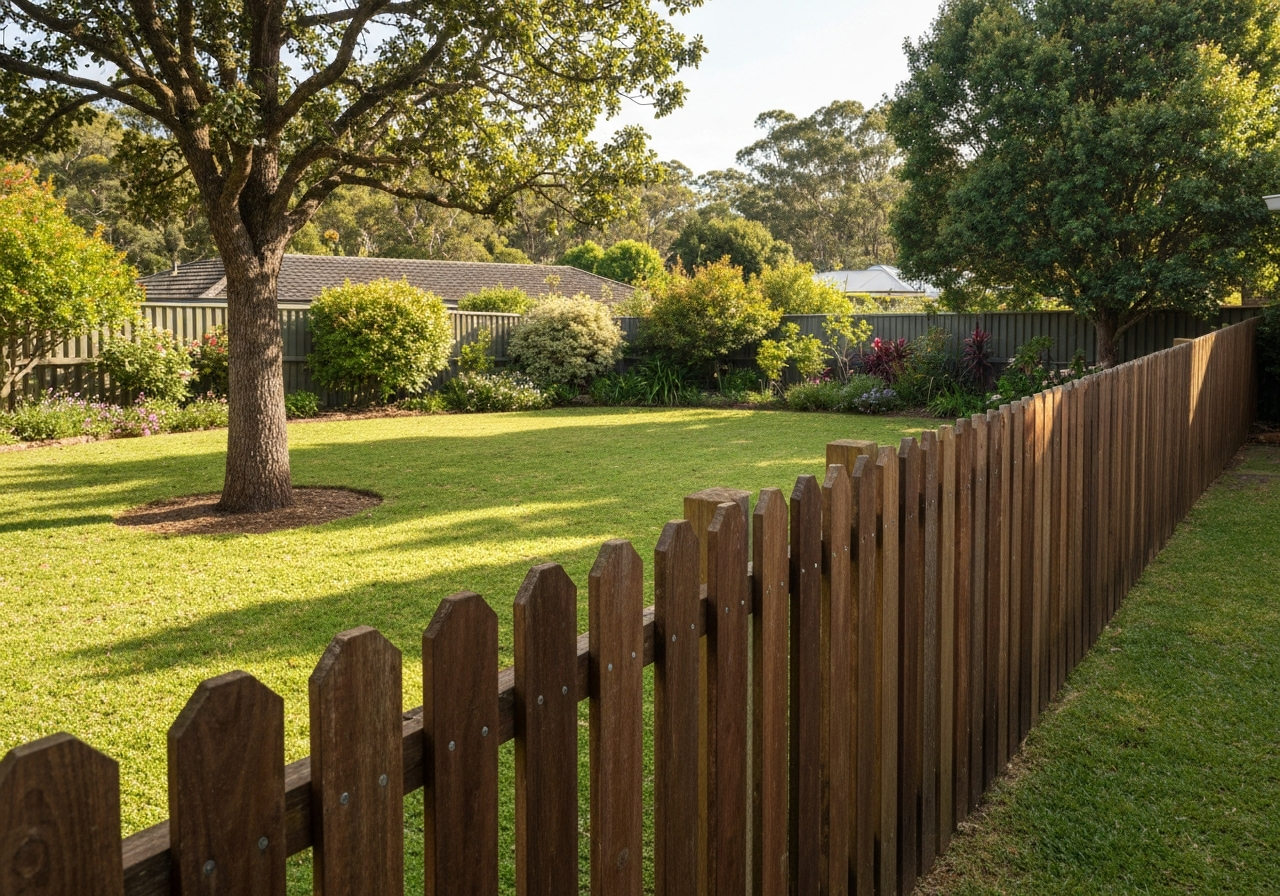
If you have a picket fence or a lumber boundary with a warm tone, keep your bordering reasonably reduced and cool. Use a natural stone or block bordering that doesn't bewilder. Pair with growing structures like prostrate groundcovers and tool hedges that soften the fencing line.
The fence is the structure. The bordering need to be the crisp line below, not the headline.
Idea 2: provide panel fence with split stone and low grasses
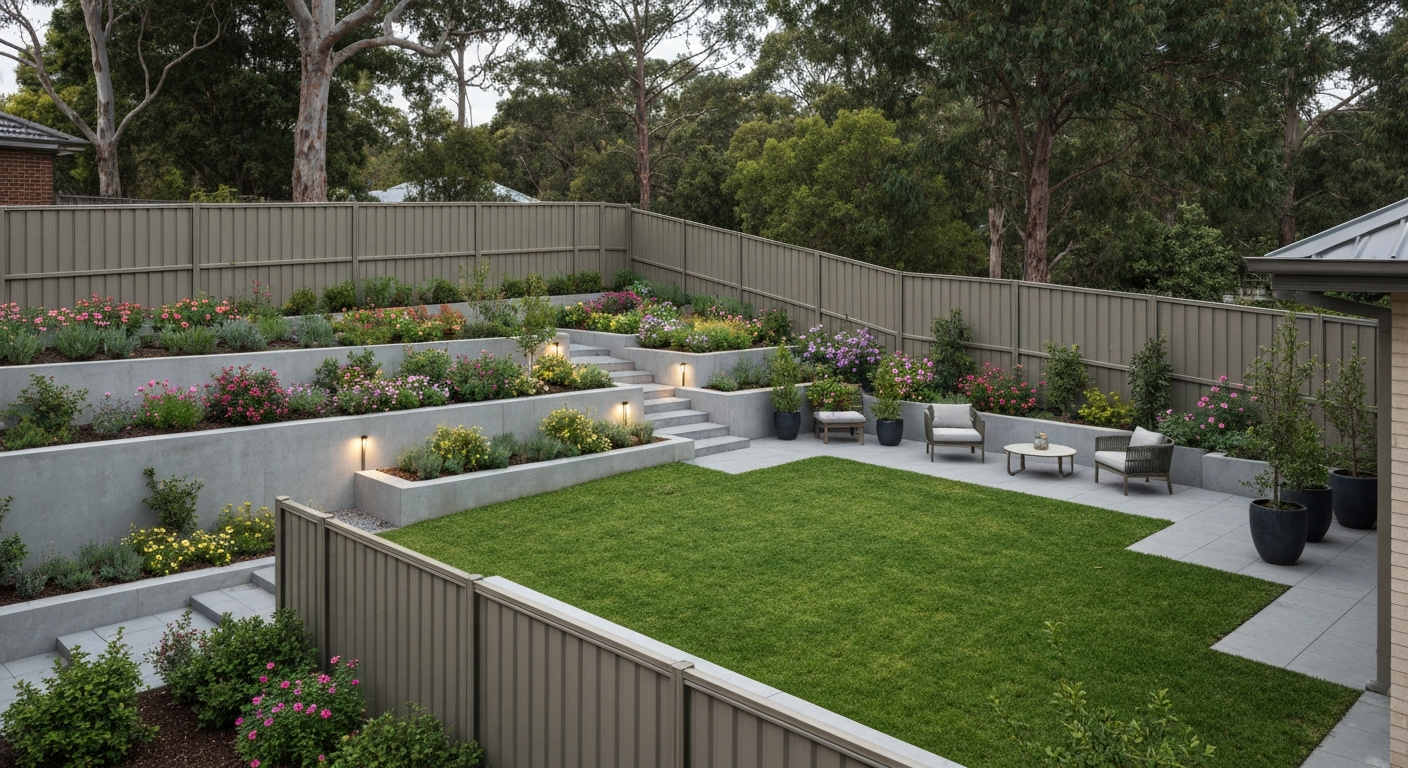
For contemporary provide or panel secure fencing, you can make the yard feel premium without requiring pricey landscaping. Utilize a clean concrete or rock edging, after that develop planting in layers: taller plants behind, grasses and decorative vegetation in the middle, and reduced groundcovers at the front.
This method aids camouflage any minor bordering abnormalities with time, since plants will certainly "obscure" the boundary.
Idea 3: sleeper retention with an intentionally tipped edge
On sloped blocks, sleepers can do a work wood alone can not. If you retain a bed behind the fencing line, make use of an edging information that shows you intended the action. Also a tiny, regular rise can make the boundary feel intentional.
The most significant renovation originates from aligning the action with the fence line and maintaining it regular throughout the size, so the eye does not register arbitrary bumps.
Idea 4: upright slat secure fencing with slim metal bordering and gravel
For minimalist front gardens, narrow metal edging can hold crushed rock easily and reduce weed invasion. Gravel plus a crisp fence line looks very contemporary.
Trade-off: gravel needs occasional raking and top-up, and steel edging must be mounted on stable base so it does not shift.
Here's the contrast I would certainly use when house owners are deciding in between two popular strategies, concrete bordering versus metal edging:
|Attribute|Concrete edging|Steel bordering||-- |-- |--|| Look|Tidy and strong, extra standard modern-day|Streamlined, crisp, a lot more minimalist|| Setup tolerance|Forgives small ground variant|Reveals uneven lines promptly|| Long-term wear|Sturdy, low rot risk|Durable, however can corrode if finishing is jeopardized|| Upkeep|Usually minimal, periodic clean-up|Requires bordering positioning checks if dirt moves|| Finest match|Panel fencings, block elements, structured beds|Slat fencings, modern-day styling, gravel boundaries|
Edge cases that journey people up (and how to avoid them)
Even with a wonderful plan, some concerns turn up. These are the ones worth thinking about now.
Gates and transitions
Where there's an entrance, bordering is under more stress and anxiety from foot traffic and upkeep accessibility. If you want a smooth appearance, make sure the bordering meets the course or driveway with a purposeful transition. Prevent leaving a jagged side where grass cuttings and particles accumulate.
If you're setting up pavers near a gateway, collaborate the degrees so you don't wind up with water encountering the bed or merging at the edge.
Trenches, irrigation, and "concealed" problems
It's typical to have irrigation or drain pipelines running near the boundary. If you install edging that blocks or shifts soil in time, you may jeopardize those systems. Prior to excavating edging bases, locate watering lines if they exist. If you do not recognize, assume there are solutions near where you believe they are, and prepare a safe approach.
Weeds do not care around good intentions
Weed reductions depends on the whole system: right mulch deepness, appropriate boundary height, and regular contact between bordering and dirt. If there's a void anywhere, weed seeds and yards will certainly discover it. A well-installed edging boundary decreases the possibility for weeds, however it does not replace good yard hygiene.
Maintenance realities: what you'll actually carry out in a Melbourne year
If you want a style that still looks sharp after winter storms and summer season heat, choose materials and installment techniques that decrease ongoing work.
- timber bordering can require checking and substitute after a few years if subjected to consistent moisture
- metal edging can require a fast straighten out or soil top-up if clay activity raises it slightly
- stone and concrete edging usually hold up well, however still require weed control at the seam lines
I have actually discovered that most home owners don't mind upkeep, however they do mind repeating the exact same solution over and over. If bordering is correctly described at installment, you ought to get less "very same problem, various period" cycles.
How to select a professional and prevent miscommunication
When individuals search for fence companies Melbourne, they're commonly concentrated on the fence itself. That's easy to understand, yet if edging is part of the project, you desire a person that can coordinate with landscaping or at least interact clearly about what will certainly impact edging later.
Even if the fence and bordering are different quotes, you can still reduce tension by asking the appropriate concerns. Particularly:
- Will the fencing installer leave the ground to be levelled, or will certainly they shape it?
- How will certainly they take care of soil build-up near the fence posts?
- Are they willing to note the desired line for the edging, or can you do it with each other on site?
- What is their suggested clearance around fencing bases for recurring landscape design access?
If you can, bring the bordering service provider right into the discussion before secure fencing is completed. That doesn't have to be an expensive meeting, just a shared site walkthrough and concurred levels.
Bringing it all with each other: a style strategy that lasts
The ideal garden edging and fencing pairings in Melbourne share one concept: they respect exactly how water relocations and exactly how dirt acts. They also respect how people make use of the space, where you stand, where you walk, and how often you'll preserve the edge.
If you keep in mind nothing else, remember this: the fence is not just a boundary, and the edging is not just a design. Together, they take care of water, overview development, and make the whole backyard really feel finished.
When you obtain the placement, elevation, and water drainage right, the result is silently impressive. It looks effortless, however it's built on information many people would certainly never ever discover if you had not bothered to intend them.
And in a city where weather can alter quickly and gardens live outdoors via whatever, that kind of preparation is the distinction between a border that looks good for a period and one that stays great for years.