Fencing Installer Melbourne: Ensuring Proper Spacing and Positioning
A straight fencing line sounds basic up until you view one being set up severely. The posts end up a little too close, the rails bow, the pickets wander out of square, and suddenly the whole limit looks "off" from the road. In Melbourne, where wind, soil activity, and shifting ground dampness are part of every day life, spacing and placement are not cosmetic information. They are what make a decision whether the fencing looks crisp for years or begins asking you to tighten, change, or paint far earlier than you planned.
If you have ever before stood back after a quote, after that looked at the completed task reasoning, "That gap is wrong," you already comprehend what I suggest. The distinction normally boils down to just how the fence installer set out the lines, measured the spacing, and kept whatever real while the materials were being dealt with and adjusted.
This short article is about what "appropriate" truly indicates for a fence installer Melbourne style job, with functional examples from typical scenarios I see on-site, from suburban yards to side accessibility leaves older properties.
Spacing is greater than a measurement, it is exactly how the fencing breathes
Most individuals concentrate on the distance in between articles or the cleanliness of the pickets. Spacing is that, however it is likewise exactly how the fence handles movement. Timber expands and agreements. Steel braces can flex a little under wind tons. Concrete and soil can resolve over time. Also when everything is developed "correctly," a fencing is still a structure that needs sensible clearances so it can relocate without everything turning out of alignment.
When a fencing installer sets out article settings, they are not just placing timber at equivalent intervals. They are planning for:
- the density of posts and rails, which changes what you see from the outdoors
- the thickness of pickets or slats, which manages how light and darkness loss throughout the fencing
- the room needed at gates and where the fence fulfills existing structures
- the means the fence line could have a small contour, after that gets squashed by a stiff design
I have seen fences where posts were evaluated clean "on paper" periods, yet the noticeable spacing in between pickets ended up irregular because the installer did not represent the real equipment thickness and the chosen overlaps. You get a fencing that looks like it is slowly wandering, although every message is "in the appropriate spot."
On a contemporary Colorbond-style run, the concern can still appear as misaligned overlaps, which can be subtle in the beginning glance, then apparent once the sun strikes the panels in winter. With timber paling or slat fencing, spacing errors are easier to find because the eye tracks each picket individually.
Alignment starts before the initial blog post enters the ground
A great fence installer is doing geometry job long prior to they start piercing. The distinction in between a fence that looks properly laid out and one that ends up "close enough" is mainly about these very early decisions.
The line you pick ends up being the fence you get
There is the boundary line, the useful fencing line, the council obstacles (where relevant), and in some cases an existing fence referral that has actually been sitting jagged for ten years. The installer has to decide what line is being developed to.
In Melbourne, properties typically have:
- uneven obstacles along side boundaries
- older fencings that do not match today's limit survey
- tree roots and solutions that force a small moving of post placements
A responsible fence installer Melbourne group will certainly talk through the practical line early. If you ignore that conversation and just chase an optimal mathematical boundary, you may end up with messages that land on rock, with rails that fight for straightness, or with fencing sections that can not be uniformly spaced due to the fact that the border changes direction in ways you did not anticipate.
Sight lines and "square" are not the exact same thing
People claim "make it square" as if it is a solitary step. On the ground, squareness is what you examine at several points while you build. A fence can be square at one edge and still skew along a run if the intermediate articles are not checked for placement as you go.
I have actually walked jobs where the first few messages looked excellent, after that halfway down the line the spacing narrowed, and the fencing developed a soft diagonal. The installer most likely collection a string line as soon as, after that relocated pieces into place without rechecking the line after every couple of posts. It is a very easy blunder when you are functioning quickly, and it is specifically what causes inconsistent gaps.
How installers obtain spacing incorrect (and exactly how it shows up later on)
Spacing issues tend to reveal themselves via three common "tells." When you know what to search for, you can often detect the underlying issue.
1) Uneven picket spaces throughout one fencing panel
If the space between pickets expands and diminishes, the fence line is typically not perfectly lined up, or the pickets were not reduced and fitted to a regular recommendation factor. Occasionally the rails are not level. Various other times the installer started with a "initially picket" and afterwards maintained repeating the same spacing without readjusting for the last few boards when the run ended.
You will certainly frequently discover this much more in direct sunlight due to the fact that the darkness between pickets exaggerate the variation.
2) Bed rails that look directly from one angle, then not from another
Alignment can be right in strategy sight yet wrong in elevation. If a fence installer Melbourne job did not keep constant rail elevation or did not make up for ground autumn, you may obtain a fence that appears fine at the road but looks uneven down the side border, where the rating changes.
The repair is rarely to "simply put even more braces in." The better repair is to get post depths and laying out correct so the rails have a consistent line, then use suitable techniques for tipping, sloping, or leveling based upon the fence style and local expectations.
3) A fencing that satisfies eviction with a space you did not approve
Gates are the end point for a great deal of fencing lines. If the message positions near the gate are off by also a small amount, the latch side can end up also tight, that makes the gate scrape or otherwise shut totally. If you try to make up with shims or forcibly the joints to straighten, you typically wind up with misaligned gaps even more down the line.
The "appropriate spacing and placement" component below is not only the gate hardware. It is the fence geometry that feeds into it.
The Melbourne reality: ground problems and wind make accuracy pay off
There is a reason individuals particularly look for a fencing installer Melbourne. It is not even if of regional accessibility. It is since Melbourne conditions can be demanding.
Clay soils can shift with dampness. Suv lawns can have hidden services. Stormy weather can test a freshly installed fence before the concrete has resolved fully. A fencing can also be subjected to gusts in open yards, which enhances the lots on blog posts and rails.
When an installer takes care about spacing and positioning, they lower the number of "field adjustments" they require to make later. Those modifications frequently entail:
- re-drilling openings in brackets
- trimming rails unevenly
- forcing pickets to land where the voids are already inconsistent
- re-leveling sections after the post concrete has actually partly healed
A percentage of cutting is typical, yet repeated modifications are an indicator the setup was not strong in the first place.
I remember one work where the client desired a tight, consistent view a lumber slat fencing. The installer spent added time inspecting line and leveling early, including establishing momentary positioning factors along the rails. The wind got that afternoon. When the fixings were done, the fence remained real even as the blog posts cleared up. The next day, we might still see the consistent slat spacing, no "breathing" in the spaces. That is what high quality looks like when the weather condition turns.
Setting out: what "correct" appears like in practice
A great deal of fence installers use string lines and dimensions that just make sense if you have actually done it a hundred times. The excellent part is that you do not have to be an engineer to recognize what is taking place. You can still ask questions and observe whether the task is being set up thoughtfully.
Here are the main points I focus on when I stroll a website with a Fence installer or Fence installers team.
First, the referral points. Are they using fixed sites, or are they determining from whatever occurs to be most convenient at that moment? Referral directs issue due to the fact that every dimension is only just as good as where it starts.
Second, the spacing logic. If the fencing makes use of a repeated device like a bay of pickets or slats, the installer ought to be able to discuss exactly how they manage the "cut end." For example, if the bay length does not split uniformly by the picket spacing, the regular method is to change the end spacing, differ the final cut, or re-balance by changing the total layout. A fast and sloppy technique is to maintain the end as a random trimming task and approve whatever spacing results.
Third, the blog post verticality and positioning checks. Blog posts are seldom flawlessly upright in the first attempt. You can set them plumb, then discover they drift a little while concrete is poured. The better installers examine and fix throughout the pour and prior to the concrete completely sets.
Fourth, the rail degree strategy. Some fences are meant to follow natural contours with a tipped look. Others are implied to be aesthetically degree even if the ground inclines, which requires a various message deepness strategy. Blending these strategies mid-run is exactly how you get a fence that "really feels off" also if all the measurements look tidy.
Fifth, the method to corners and transitions. Where the fence modifications instructions, positioning mistakes gather. A strong installer deals with edges as a vital alignment point instead of an afterthought.
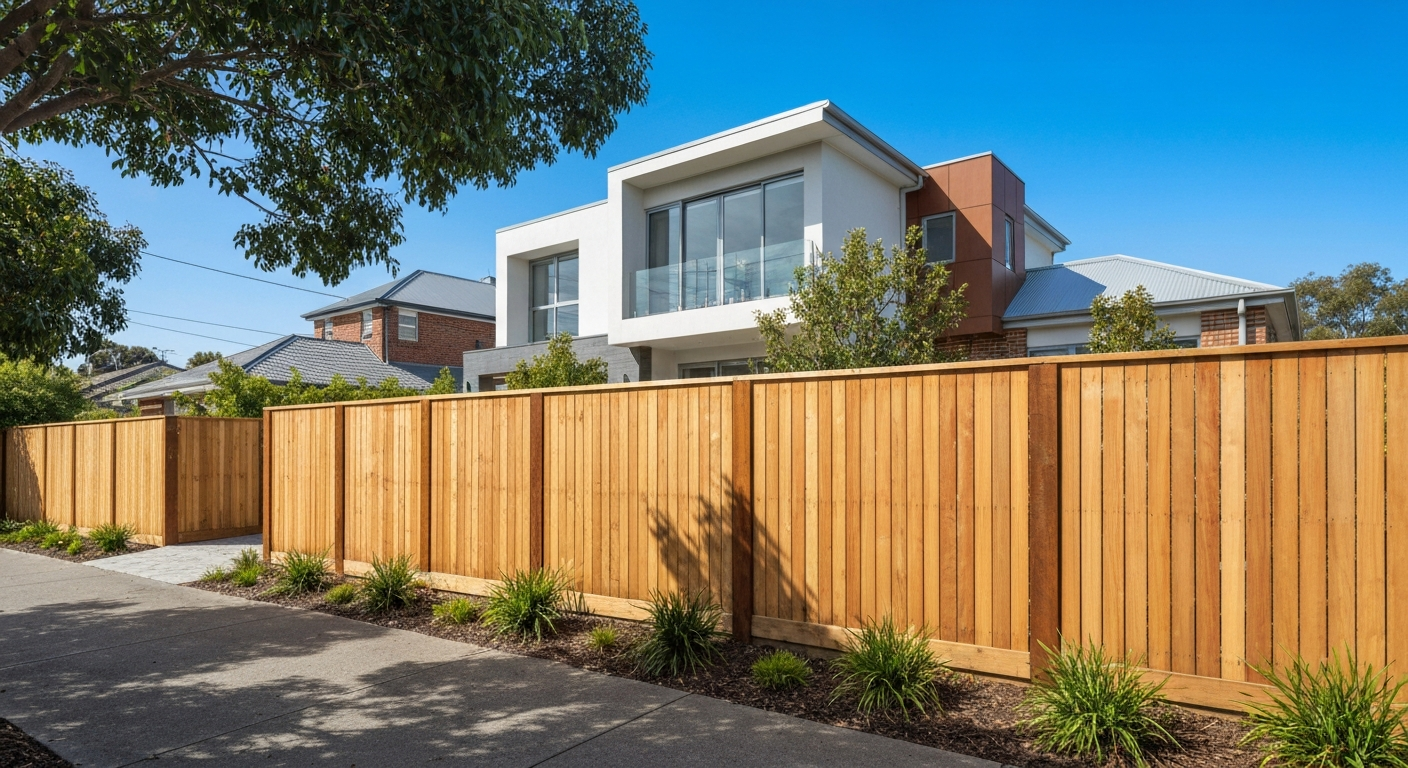
If you are working with a Fencing installer or Fencing installers for a border fencing that runs next to your home, those five items inform you greater than lots of people realize.
A straightforward sanity check you can do before mount finishes
You do not require to gauge every void with a leader, however you can find numerous alignment and spacing concerns with a few fast checks. This is specifically helpful if you are the kind that can not aid but enjoy the process.
If you want a functional walkthrough, ask your installer to stop and do a quick visual talk to you. The objective is to verify the fence line looks regular from the main seeing angles.
Here is a brief checklist I advise utilizing on-site, preferably mid-job:
That last point is surprisingly efficient. People often judge "straightness" in a different way depending upon where they stand.
Materials and fence design: spacing rules alter with what you build
Not every fence is constructed with the very same logic. Spacing and alignment are affected by the materials, the correctings, and the anticipated wear.
Timber: the spaces you desire currently can alter slightly later
Timber pickets commonly shrink or increase across seasons. If spacing is established too securely, you can end up with boards touching in warmer or wetter cycles, or with a "bowed" look as the fencing responds. If spacing is also charitable, you get an irregular appearance since minor activity ends up being aesthetically obvious.
A thoughtful Fence installer Melbourne expert will normally permit the timber's practices and will certainly stay clear of rigid, absolutely no tolerance spacing that leaves no space for movement.
Steel and Colorbond-style panels: the overlaps matter more than the message spacing
With metal secure fencing, the noticeable pattern originates from overlaps, panel sizes, and the way rails are placed. If messages are equally spaced but the rails are a little off, the overlaps can show up to "stroll" along the fence line.
Also, metal fences are unforgiving in the feeling that as soon as the fixings are established, remedying positioning can require eliminating areas and re-fixing. That is why the very early layout and rail alignment checks are so important.
Close-board lumber and slat fences: alignment is what makes it look premium
Close-board fencings, where you see marginal gap between boards, are everything about the straightness of edges and the uniformity of the face line. Slat fences include an additional layer, because the slats need to be equally spaced to look deliberate instead of accidental.
On these styles, a fence installer could make use of short-term spacers or jigs. When those are used appropriately, spacing is consistent. When they are made use of casually, spacing wanders and the fence begins looking hand-finished in the incorrect way.
Dealing with unequal ground without ruining the lines
One of one of the most usual side cases in Melbourne is a fencing that runs across unequal ground. You have two selections, generally.
You can follow the contour and step the rails or the picket heights. Or you can maintain a much more level visual line, which calls for adjusting blog post midsts and possibly creating a different connection between the fence and the ground.
Both methods can look excellent. The trick is to determine early and carry out consistently.
When installers improvisate, you obtain a fence that transforms its method mid-run. As an example, the first area could tip neatly, after that halfway down the incline it might try to end up being degree. The result is an inconsistent aesthetic pattern, and the voids can appear irregular due to the fact that the boards rest at a little various angles.
A fence installer Melbourne that recognizes local practice will normally ask concerns about the look you desire. Some house owners choose a stepped base that follows the contour. Others want the fencing to show up level and clean despite slope. Either stands, but blending them is where you begin going after positioning adjustments after the fact.
The "bay finishes" problem: what happens when the mathematics does not fit
Many fence runs do not split evenly by your intended spacing device. The fencing size in between edges or in between existing frameworks might be an unusual number. Wood boards can be found in common sizes. Panels come in set dimensions. That means you should make a decision regarding completion sections.
There are three usual techniques installers use, and the best one depends upon your fence design and your tolerance for visual variation:
- adjust the end spacing while keeping the main pattern consistent
- trim one board more than the others at the end to protect the major spacing rhythm
- slightly shift blog post positions to make the bay length work much better, then re-check placement and gate measurements
A great fence installer will usually explain what they are intending to do before they start securing dealings with. If you see materials reduce arbitrarily on-site without a clear end strategy, that is when spacing often tends to drift.
I have actually seen attractive fences ruined by end pieces that were "just made to fit." The error is not trimming, it is cutting without re-balancing the pattern.
Choosing the appropriate Fence installer for spacing and alignment
When you are comparing quotes, you want to select a Fence installer Melbourne who treats set out as part of the craft, not an administrative step. Rate issues, yet so does process.
You can typically evaluate whether a fencing installer bewares by how they manage a few fundamental inquiries:
- Do they ask about your exact fence kind and the anticipated look of spacing?
- Do they speak about just how they will take care of corners, gates, and end sections?
- Do they state how they will keep rails degree or exactly how they will handle sloping ground?
- Do they explain any strategy to account for dirt problems, including blog post holes and concrete method?
If the responses are unclear, you might be paying for speed rather than precision. If the answers specify and grounded in what you can see, you are more likely to obtain consistent positioning and spacing.
There is also something to be stated for seeing comparable operate in the very same residential area or town. Even if you can not check out a past work, a good Fence installers Melbourne group often has pictures that reveal the changes near gateways and the alignment along much longer runs.
Why tiny positioning problems come to be huge costs later
A fence might look "all right" for the first couple of months, after that the problems broaden. Misalignment is just one of those concerns that can worsen, primarily since repeated climate cycles and negotiation make it less complicated for little mistakes to end up being visible.
If posts are not established correctly, you can see voids transform after a hefty storm. If rails are not straight, the dealings with can experience stress and the fencing can begin to look a little twisted. If pickets are spaced irregularly, it is not simply looks, it influences exactly how the fencing drops water, and it can also influence how dust and particles develop in those gaps.

Eventually, the price is not only replacement products. It is labor to get rid of and re-fix, and it is wasted time, especially if you need to work with gain access to and disposal.
That is why the "boring" work of spacing and positioning very early is usually the cheapest part of the job.
Getting it appropriate: a reasonable expectation for coating quality
Even the most effective work is not robot. Wood can have slight differences board to board. Hardware can differ. If the ground is uneven, some visual variation is normal, especially in stepped fencing styles.
So the objective is not excellence in every mini void, it is uniformity in the total pattern and correct alignment from the primary seeing angles. A good fencing installer need to be able to create that balance.
If you request a limited, uniform appearance, it is sensible to anticipate the spacing to be consistent throughout the run. But you ought to also be versatile about just how the fencing manages ends and transitions. If the last bay does not fit mathematically, the installer's task is to make that end appearance deliberate instead of an afterthought.
Common questions homeowners ask (and exactly how I answer them)
People generally want reassurance before job starts. Here are a couple of questions that turn up constantly when house owners talk to a Fencing installer Melbourne contractor.
"Can you keep the spaces specifically the exact same anywhere?"
You can get really close, particularly with conventional batten spacing and regular rail alignment. The genuine constraint is exactly how the fence finishes and edges are dealt with, plus just how the ground differs. The best installers will discuss their technique to stabilizing the pattern as opposed to appealing identical gaps at every millimetre.
"Will it matter if the fence is slightly off degree at the begin?"
It issues more than you believe due to the fact that little elevation distinctions can equate right into larger spacing differences at the aesthetic face of the fence. If rails turn a little, the top sides of boards wander, and the gaps start to look unequal also if the spacers were used.
"What about gates, do they impact spacing down the line?"
Gates are support factors. If eviction opening is off, the surrounding fence areas typically need to be adjusted. That modification can alter spacing rhythm near eviction, so it is best to prepare gate placing very early and maintain the line consistent around it.
Final thoughts on spacing and alignment
Proper spacing and alignment is the foundation of a fencing that looks right, remains straight, and ages gracefully. When a Fence installer or Fence installers Melbourne team concentrates on laid out, line checks, and constant rail progressing, you see it promptly. The pickets sit with self-confidence. The voids read as intentional. Corners and gates land where they should.
In Melbourne particularly, the task is made tougher by ground conditions and the way weather condition evaluates a newly mounted framework. That is why I rely on installers who treat the very early steps as genuine workmanship, not a procedure. If you get that right, the fencing is not simply something that divides residential property, it ends up being a tidy limit attribute you do not need to keep monitoring.
If you are preparing a new run or replacing an older fencing, focus on exactly how the installer sets the line and handles completions. Those information generally matter greater than the exact style you picked from a brochure, since they figure out whether the completed fence looks tranquil and calculated, or uneasy and somewhat off no matter just how usually you look away.