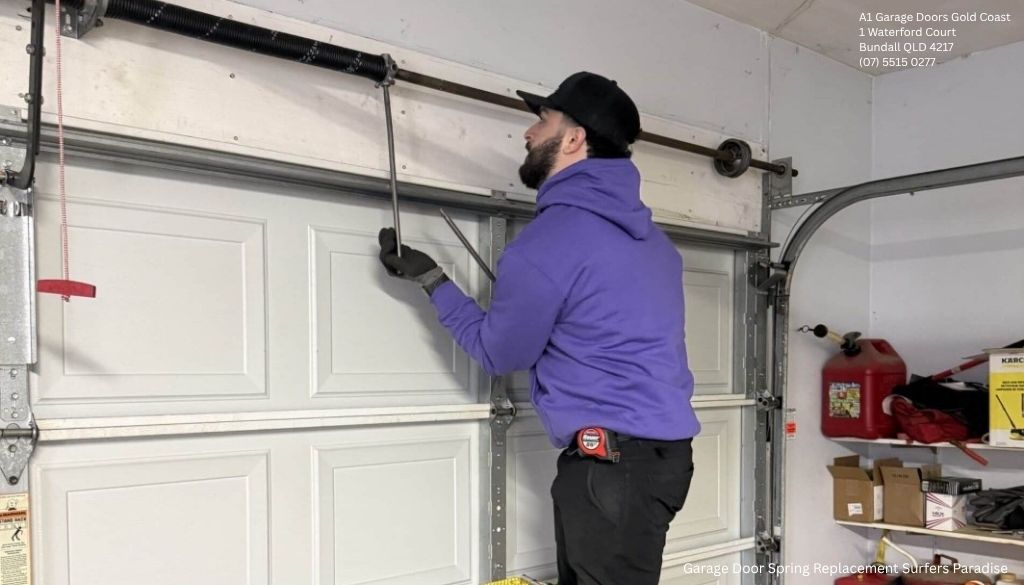
Garage Door Maintenance: Testing the Reversal System Monthly
A garage door is often the largest moving object in a home, and when it is connected to an automatic garage door opener, it becomes a powered system that deserves regular attention. The most important monthly garage door maintenance task is not cosmetic. It is not washing the panels or wiping dust from the opener housing. It is testing whether the door reverses when it should.
That reversal system is a core part of garage door safety. Automatic residential garage door openers in the United States are covered by a mandatory federal safety standard, and they must include entrapment protection, such as a photoelectric “electric eye” sensor or an equivalent safety system. The reason is direct and serious: a closing garage door that does not reverse can trap a person, a child, a pet, or an object beneath it.
The test takes only a short time, but it should not be treated casually. A properly functioning garage door opener should reverse when the closing door encounters an obstruction. If it does not, the opener should be adjusted according to the owner’s manual or inspected by a professional. That monthly habit is one of the simplest ways to catch a dangerous failure before it becomes an emergency.
Why the reversal system deserves monthly attention
Garage door systems tend to fade into the background because they work the same way day after day. Press a remote, hear the opener motor, watch the door move, drive in or out. That routine can create a false sense of confidence. The door may still open and close, the light may still come on, and the remote may still respond, even while an important safety feature has stopped working as intended.
The federal safety requirement exists because non-reversing garage door openers have been recognized as a hazard. Entrapment incidents involving automatic garage doors have been documented, including fatal incidents. That history is why modern automatic residential openers are expected to include entrapment protection and why monthly testing is recommended.
There is a practical reason for the monthly interval. A garage door opener is not a static appliance sitting on a shelf. It operates in a dusty, vibrating, temperature-changing environment. The door moves along garage door tracks, the opener pulls or pushes through its drive system, and the safety system depends on components being present, aligned, and functioning. A problem may not announce itself with a loud failure. It may show up only when the reversal test is performed.
Monthly testing does not replace a broader garage door inspection, and it does not cover every possible issue with garage door springs, torsion springs, garage door rollers, garage door cables, or garage door balance. It focuses on one specific question: if the door is closing and something is in the way, does the system respond by reversing?
That question matters more than whether the door sounds a little rough or the remote range has changed. Noise, delay, and wear may be signs that garage door troubleshooting is needed, but a failed reversal test is a safety issue that should be addressed promptly.
The two safety functions homeowners usually notice
Most homeowners think of the reversal system as the pair of small garage door sensors mounted near the bottom of the door opening. Those photoelectric sensors, often called electric eyes, are designed to detect an obstruction in the path of the closing door. If the beam is interrupted, the opener should not continue closing the door. Federal rules require residential automatic openers to have entrapment protection such as this kind of photoelectric sensor or an equivalent safety system.
There is also the broader expectation that a properly working opener reverses when the closing door encounters an obstruction. Both ideas are important. The photoelectric sensors help prevent contact in the first place when something crosses the door opening. The obstruction reversal response addresses what happens when the door closes onto something.
A sensible monthly garage door safety check looks at both. The sensors should be present and working, and the opener should reverse when it meets an obstruction during closing. If either test fails, the system should not be waved off as “probably fine.” It should be adjusted according to the owner’s manual or inspected by a professional who handles garage door repair.
This distinction is worth making because a door can appear normal in everyday use while still failing one part of the safety check. For example, a homeowner may always press the wall button while standing inside the garage and never interrupt the sensor beam. Another may use the remote from the driveway and never watch the last foot of travel closely. The door closes, so everyone assumes the system is safe. The monthly test replaces assumption with evidence.
A simple monthly test routine
Choose a time when the garage is quiet, the floor is clear, and you are not rushing to leave for work or bring groceries inside. A safety test should be deliberate. Keep children away from the door during testing, and keep remote controls out of their reach as a standing household rule. Garage doors are familiar, but they are not toys.
Use the owner’s manual for your specific garage door opener whenever adjustment details are needed. Different models place controls in different locations and use different procedures. If the manual is missing, do not guess at settings you do not understand. The safe next step after a failed test is professional inspection or service.
A practical monthly reversal check can be kept short:
That is the heart of the process. It is not complicated, and it should not require force or improvisation. The test should confirm that the safety system works, not challenge the door with risky behavior. Standing under the door, reaching beneath a moving door, or letting children “help” with the test defeats the purpose.
What a passing test tells you, and what it does not
When the garage door sensors work and the opener reverses properly during the obstruction test, you have confirmed an essential safety function at that moment. That is valuable. It means the entrapment protection you tested responded the way it is supposed to respond.
It does not mean the entire door system is in perfect condition. The reversal system is one part of the overall assembly. The door also depends on mechanical parts, including garage door springs, torsion springs on many systems, rollers, cables, tracks, brackets, and the door sections themselves. Garage door balance matters because the opener is not meant to compensate for every mechanical problem indefinitely.
A passing reversal test should therefore be seen as one major item in a larger garage door maintenance routine. The safety system works today, but the door still deserves periodic inspection. If the door begins to move unevenly, if cables appear out of place, if rollers bind in the tracks, or if the opener struggles in a way it did not before, those observations call for attention even if the reversal test passes.
This is where judgment matters. Homeowners can observe, clean obvious debris, and perform basic testing. They should be careful around components under tension and around work at ceiling height. Garage door installation and garage door repair often involve awkward postures, hand tools, overhead components, and cramped spaces. Those conditions create hazards even for people who are comfortable with general home projects. There is no benefit in turning a monthly safety check into a risky repair attempt.
When the door fails to reverse
A failed reversal test should change how the door is treated immediately. It is not just an inconvenience. Non-reversing garage door openers are a recognized hazard, and a closing door that continues downward when it should reverse should not be trusted.
The appropriate response is measured but firm. First, stop relying on the automatic function until the issue is corrected. Second, consult the owner’s manual for the garage door opener. The manual may describe adjustment procedures and testing steps for that specific model. Third, if the door still fails the test or if you are not fully comfortable with the procedure, call a professional for garage door repair.
Avoid the temptation to keep using the opener because “it only failed once.” Safety devices can fail intermittently, and intermittent failures are often the ones people ignore until the wrong moment. If a monthly test shows that the door did not reverse, the system has given you a clear warning.
It is also important not to solve the wrong problem. If a sensor appears blocked, clearing the obstruction may restore normal operation. But if the door still fails to reverse on contact with an obstruction, the sensor was not the whole issue. If the opener settings are changed without understanding the manual, the door may seem to close more reliably while actually becoming less safe. That is one reason professional garage door troubleshooting is often the better choice when the behavior is not obvious.
The role of photoelectric garage door sensors
Garage door sensors are small parts with a large safety role. They are typically positioned near the lower part of the door opening so the system can detect an object, person, or pet in the path of the closing door. The mandatory federal standard allows for photoelectric sensors or an equivalent entrapment protection system, but for many homeowners, the visible electric-eye setup is the safety device they recognize.
During a garage door inspection, confirm that the sensors are physically present and appear aimed across the door opening. The test is not merely visual, though. A sensor can look clean and still fail to communicate properly with the opener. The important question is whether interrupting the sensor path prevents or reverses closing as intended.
Sensor issues can sometimes be simple, such as an object stored in the beam path. A broom, box, bicycle tire, or trash bin placed near the door opening may interfere with normal operation. In those cases, the opener may refuse to close, or garage door repair Gold Coast it may reverse unexpectedly. The nuisance is real, especially in a crowded garage, but the behavior may be the safety system doing its job.
The more concerning case is the opposite: the door continues closing when the sensor path is interrupted. That should be treated as a failed safety check. The sensor system is part of the required entrapment protection, and if it is not working, the opener needs attention.
Children, remotes, and ordinary household habits
Garage door safety is not only a mechanical issue. It is also a household behavior issue. Children should be taught that the garage door is not something to race under, hang from, or play with. Remote controls should be kept out of their reach. A remote on a low shelf, in an unlocked vehicle, or clipped where a child can access it can turn the door into an unsupervised moving hazard.
Adults get casual too. People tap the remote while walking away. They close the door without watching it finish. They store sports gear near the sensor path and then get irritated when the opener reverses. They let the door close while a child is still gathering a backpack or a pet is wandering near the threshold.
The monthly reversal test helps reinforce better habits. It reminds everyone in the home that the door is powerful enough to require safety systems. A good rule is to watch the door until it fully opens or closes, especially when children or pets are nearby. Another is to treat any odd behavior, such as unexpected reversing or failure to respond to the sensors, as something to investigate rather than something to override.
How reversal testing fits into broader garage door maintenance
A monthly reversal test is the safety anchor, but most doors benefit from broader attention over time. Garage door maintenance is partly about preventing inconvenience and partly about noticing unsafe conditions early. A door that is poorly balanced, dragging, crooked in the tracks, or noisy in a new way may put extra strain on the garage door opener. A worn roller or damaged cable may not have anything to do with the sensor beam, yet it can still affect safe operation.
Garage door lubrication is often discussed as if it solves every noise. It does not. Lubrication may be appropriate for certain moving parts when done according to the door and opener manufacturer’s instructions, but it is not a cure for broken hardware, failing springs, damaged tracks, or a malfunctioning reversal system. If the door fails a safety test, lubrication is not the answer.
Garage door balance also deserves respect. A balanced door should not depend entirely on the opener to manage its weight. Springs do the heavy lifting in a properly functioning system, and torsion springs in particular are tightly wound components that should not be handled casually. When springs, cables, and related hardware are involved, the risk level changes. Many homeowners are capable of observing symptoms, but adjustment or replacement is typically work for trained technicians.
Garage door replacement or a new garage door installation may be worth discussing when an older system has repeated safety issues, when parts are obsolete, or when the door and opener no longer meet the household’s needs. Replacement is not the first answer to every failed test, but safety should carry real weight in the decision. A door that cannot be made to reverse reliably is not a door to keep using as-is.
Signs that call for professional inspection
Some problems deserve more than a quick homeowner check. If the safety system fails, if the door movement changes suddenly, or if the opener behaves unpredictably, a professional garage door inspection can prevent guesswork. The goal is not to sell unnecessary work. The goal is to understand whether the opener, door hardware, sensors, tracks, cables, rollers, or springs are contributing to the problem.
Call for service when any of these conditions appear:
The last point is important. Adjusting a garage door opener is not the same as tightening a loose cabinet hinge. The opener interacts with a large moving door and safety systems. If the procedure is unclear, bringing in someone who performs garage door repair regularly is the safer path.
Why not wait for annual service?
Annual service can be useful, but it is not a substitute for monthly safety testing. A reversal system can fail between service visits. Sensors can be bumped, blocked, or damaged. Household storage patterns can change. A remote can end up in a child’s hands. A garage door opener that passed inspection months ago still needs routine checking.
The monthly test is also short enough that it does not need to become a project. Many homeowners tie it to another recurring task, such as changing an HVAC filter, reviewing smoke alarm dates, or doing a first-weekend-of-the-month home check. The exact schedule matters less than consistency. If the test happens only when someone remembers a strange noise, it is not really a maintenance routine.
Professionals who work around doors tend to notice the same pattern: homeowners often call after the door has been acting strangely for a while. The opener reversed unexpectedly, then it worked fine. The sensor light looked different, then someone bumped it back. The door hesitated, then closed after a second button press. Each event seemed minor. Together, they described a system asking for attention.
Monthly reversal testing gives homeowners a fixed moment to stop normalizing those symptoms. Either the safety system works, or it does not. If it does not, the next step is correction.
A note on older openers and replacement decisions
Some older garage door openers may lack the safety features people now expect from residential automatic systems. Current mandatory standards require entrapment protection, such as photoelectric sensors or an equivalent system. If an opener does not have visible sensors, or if the homeowner cannot confirm that an equivalent safety system is present and functioning, the opener should be evaluated.
Garage door replacement is often discussed in terms of curb appeal, insulation, or convenience. Those considerations are real, but safety should sit higher on the list. The same applies to garage door opener replacement. A dependable opener is not merely one that lifts the door. It is one that responds correctly when something is in the way.
If a technician recommends replacement rather than adjustment, the reason should be explained plainly. Is the opener failing the reversal test? Are replacement parts unavailable? Is the entrapment protection missing or not repairable? Is the door hardware in such poor condition that opener adjustment alone will not address the safety concern? A good recommendation should connect directly to observed conditions, not vague fear.
Keeping the test professional, even at home
A homeowner does not need to become a technician to maintain a safer garage door. The best approach is disciplined and modest: test the reversal system monthly, verify the garage door sensors are working, keep remotes away from children, observe changes in door movement, and call for help when the system fails a safety check.
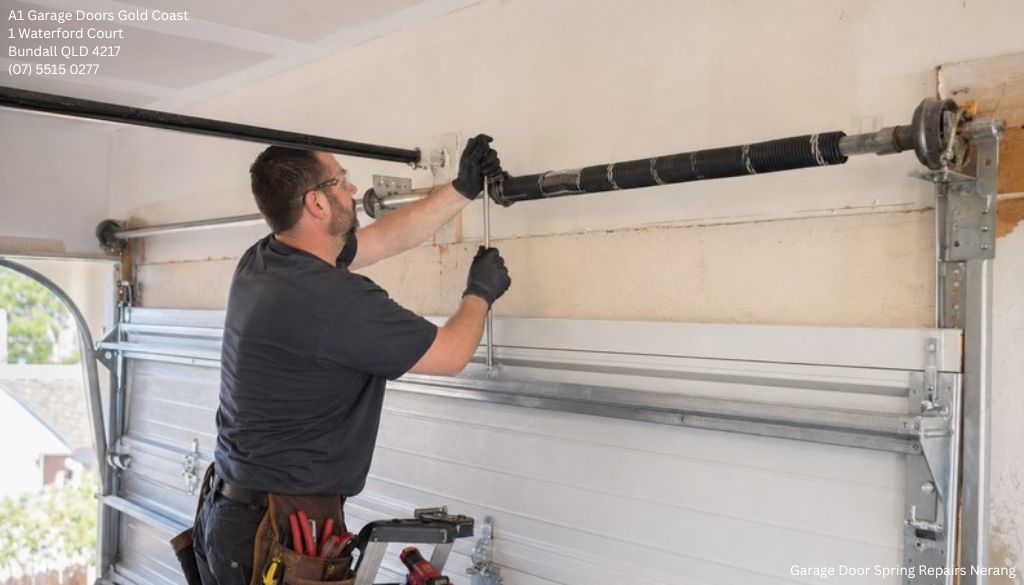
That approach respects the limits of do-it-yourself maintenance. Working on garage doors can involve overhead components, cramped spaces, hand tools, awkward body positions, and parts under force. Professional installers and repair technicians plan around those hazards. A homeowner standing on a ladder under an opener, reaching around tracks, or experimenting with spring hardware may create more danger than the original problem.
The monthly reversal test is different. It is an owner-level safety check, recommended because it catches a known hazard. It does not require disassembling the opener. It does not require handling torsion springs or garage door cables. It simply asks the system to prove that it will reverse when it should.
Make the monthly test part of owning the door
Garage doors are easy to ignore until they fail, but safety features deserve more than passive trust. Automatic residential openers are required to have entrapment protection because the risk is real. A non-reversing opener is not just a mechanical defect. It is a hazard.
Set a monthly reminder. Watch the door operate. Test the sensors. Confirm the reversal response using the owner’s manual. If the door fails, stop relying on the automatic opener until it is adjusted correctly or inspected by a professional. Keep remote controls away from children and teach them not to play near the moving door.
Good garage door maintenance is not about fussing over every sound or replacing parts prematurely. It is about knowing which checks matter most. The reversal system is one of them. Test it monthly, take failed results seriously, and let safety guide the next decision.