Garage Door Opener Inspection Guide for Homeowners
A garage door opener is one of those household systems that can fade into the background until something feels wrong. The door goes up, the door goes down, the light comes on, and the family moves through the garage without much thought. That routine is exactly why inspection matters. A moving garage door is large, heavy, and automated, and the opener is responsible for controlling that movement safely.
For homeowners, a proper garage door inspection is not about taking the machine apart or guessing at internal adjustments. It is about confirming that the visible safety features are present, that the opener responds correctly during basic checks, and that warning signs are not ignored. When an opener fails to reverse, when the garage door sensors are missing or unreliable, or when the door behaves unpredictably, the issue moves beyond convenience. It becomes a garage door safety concern.
Automatic residential garage door openers in the United States are covered by a mandatory federal safety standard. That standard requires entrapment protection, such as a photoelectric “electric eye” sensor or an equivalent safety system. The point is simple: a closing garage door must not continue forcing itself downward when a person, pet, or object is in its path. The safety reversal system is not an optional accessory. It is a core part of the opener’s safe operation.
This guide focuses on what a careful homeowner can inspect, what should be tested regularly, and when garage door repair should be handled by a professional rather than treated as a weekend experiment.
Why the opener deserves more attention than it usually gets
Most people notice the garage door opener only when it gets noisy, stops responding to the remote, or leaves the vehicle trapped inside. In service work, though, the more important problems are not always the loud ones. A garage door opener can seem normal from across the driveway while its safety system is out of alignment, bypassed, or failing to reverse properly.
That is why the monthly safety reversal test matters. Safety agencies have warned repeatedly that non-reversing garage door openers are hazardous. A properly functioning opener should reverse when the door closes onto an obstruction. If it does not, the door should not be treated as “mostly fine.” It should be adjusted according to the owner’s manual or inspected by a qualified professional.
The difference between a working opener and a dangerous one can be subtle. A homeowner may press the wall button, watch the door close, and assume everything is in order. But the real test is how the system behaves when something is in the path of the closing door or when the garage door sensors detect an obstruction. The opener’s job is not merely to move the door. It must move the door safely.
There is also a household behavior side to this. Children should be taught garage door safety, and remote controls should be kept out of their reach. A child playing with a remote or wall control may not understand the force and speed involved. Even with required safety features, the safest garage door is one that is not treated like a toy.
Start with a simple observation before touching anything
A useful garage door inspection begins with watching the opener complete a full cycle from a safe position. Stand clear of the door opening and observe the door as it opens and closes. Do not walk under a moving door. Do not try to steady it by hand. The goal is to notice behavior, not intervene.
Pay attention to the motion. The door should travel in a controlled way. The opener should not sound strained in a way that suggests it is fighting the door. If the door jerks, hesitates, reverses unexpectedly, or stops before reaching the floor, that is information. It may point to an issue with the opener, the garage door tracks, the garage door rollers, the garage door balance, or another part of the overall door system.
This is where homeowners sometimes make a costly assumption. They see the opener as the problem because the opener is the machine with the motor. In reality, an opener works with the door, not separately from it. If the door is poorly balanced, if garage door springs are compromised, if garage door cables are not behaving correctly, or if the tracks and rollers are binding, the opener may show symptoms even though the root problem is mechanical.
That does not mean a homeowner should start adjusting garage door springs. Torsion springs and other spring systems are under serious tension, and they are not a casual inspection item. The homeowner’s role is to recognize that the opener may be reacting to a door problem and to call for garage door repair when the behavior suggests more than a simple owner’s manual adjustment.
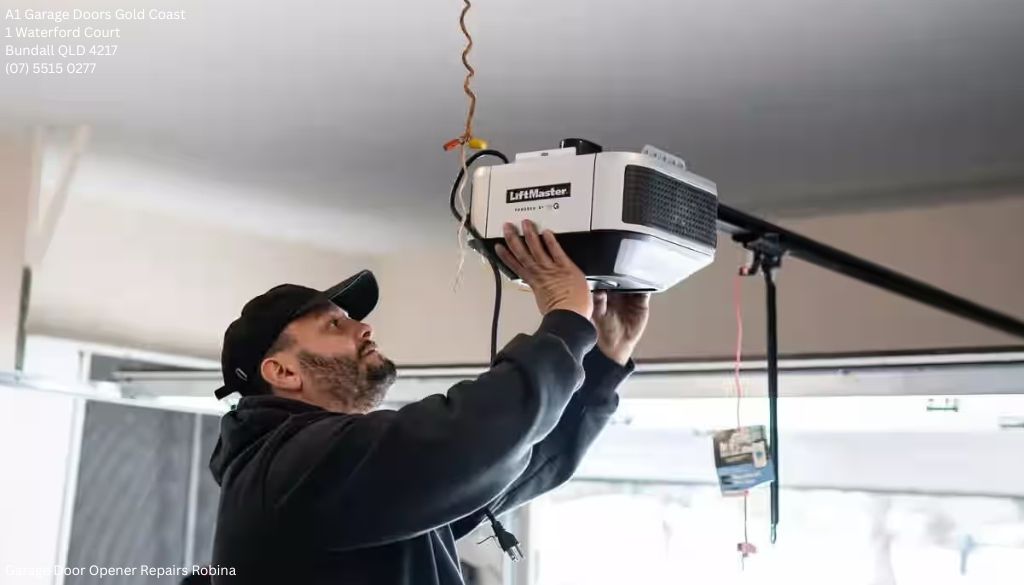
A clean visual survey also helps. Look for the opener unit mounted overhead, the rail or drive assembly, the wall control, the remote controls, the door arm, the sensors near the floor, and the path of the door through the tracks. You are not diagnosing every component at this stage. You are building a picture of whether the system appears intact, aligned, and unmodified.
The monthly safety reversal test
The most important routine check is the safety reversal test. Safety guidance recommends testing the safety reversal system monthly. That schedule may feel frequent to a homeowner who has never had an opener problem, but it makes sense. The garage door is used repeatedly, often in busy moments when people are backing out, unloading groceries, or moving children and pets through the space. Safety features need to work every time, not just when the opener is new.
The exact procedure can vary by opener, so the owner’s manual matters. The general expectation is that a properly functioning opener should reverse when the closing door contacts an obstruction. If it does not reverse, the opener needs adjustment according to the manual or inspection by a professional.
Use care during any test. The purpose is to confirm the reversal response without putting hands, feet, pets, or people under the door. Keep children away from the area while testing. If anything about the test feels unclear, stop and use the owner’s manual or contact a professional. A garage door troubleshooting step that creates risk is not a useful step.
A failed reversal test should be treated seriously. Do not keep using the opener for weeks while waiting for a convenient time to deal with it. A non-reversing opener has been specifically identified as a hazard. If the door continues down against an obstruction, the safety system is not doing its job.
One common mistake is to test the remote and consider that a complete opener inspection. The remote only confirms that the opener receives a command. It does not prove that entrapment protection works, that the door reverses properly, or that the sensors respond as they should. The reversal system is the safety test that deserves priority.
Confirm the garage door sensors are present and working
Photoelectric sensors, often called electric eye sensors, are usually installed near the lower part of the door opening, facing each other from opposite sides. Their role is to detect an obstruction in the door’s path. Federal safety requirements call for a sensor or equivalent entrapment protection on residential automatic openers. For the homeowner, that means the sensor system is not decorative and should never be ignored.
During an inspection, look at the sensor area before closing the door. Make sure nothing is blocking the path between the sensors. Storage bins, brooms, bikes, leaves, and even a slightly shifted item near the track can interfere with the beam. A garage often becomes a storage room by accident, and the lowest part of the door opening is where clutter tends to gather.
The sensors should be mounted where they can monitor the opening as intended. If a sensor is hanging loose, pointed away from its mate, damaged, or missing, the opener should not be treated as safe. If the opener behaves oddly and the sensors look disturbed, that is a reasonable clue, but not a license to bypass them. The solution is to restore proper safety function, not defeat it.
Homeowners sometimes tape a sensor in place, wedge it against a box, or move it out of the way because the door “keeps stopping.” That turns a nuisance into a hazard. The safer response is to find out why the sensor is not operating correctly. It may be blocked, misaligned, damaged, or part of a larger opener issue. If basic cleaning and repositioning according to the owner’s manual do not resolve the problem, professional garage door repair is the right next step.
When checking sensors, also remember that passing one test does not make them permanent. Vibration, accidental bumps, seasonal clutter, and routine garage activity can change conditions around the opening. That is why garage door maintenance should include repeated safety checks rather than a one-time look when the opener is installed.
A homeowner’s opener inspection checklist
Use this short checklist as a practical monthly routine. It is intentionally limited to observations and safety checks that do not require disassembling the opener or handling high-tension parts.
This checklist does not replace the owner’s manual. It also does not replace trained service when mechanical parts are involved. Its value is consistency. A brief, careful inspection every month is more useful than a long, improvised inspection every few years.
The opener is only one part of the door system
A garage door opener can only perform safely if the door system it operates is in acceptable condition. That is where garage door maintenance becomes broader than the motor mounted to the ceiling. The door moves through tracks, rolls on garage door rollers, relies on cables, and is counterbalanced by garage door springs. Many residential systems use torsion springs. These parts affect how much work the opener must do and how predictable the door’s movement will be.
The important homeowner takeaway is not to service every part personally. It is to recognize the relationship. If the door is out of balance, the opener may strain. If the rollers bind in the garage door tracks, the opener may stop or reverse. If a cable problem exists, the door may move unevenly. If springs are worn or damaged, the opener may be asked to lift more than it should.
Garage door balance is especially important because the opener is not meant to be a substitute for a properly balanced door. A balanced door allows the opener to guide movement rather than force it. When balance is wrong, the opener may become louder, slower, or less reliable. More importantly, the door itself may become less predictable.
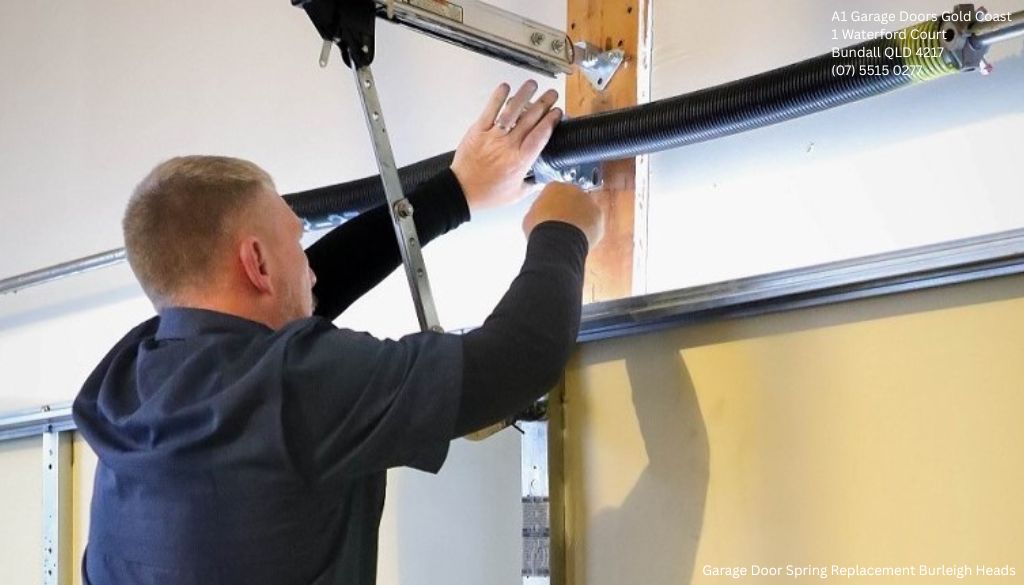
That said, spring and cable work belongs in the professional category. Torsion springs store energy, and mistakes around them can cause injury. The same caution applies to cables and other parts that are connected to spring tension. A homeowner can observe, listen, and report symptoms. A qualified technician should handle adjustments, replacement, and repairs involving high-tension components.
Garage door lubrication also sits in a gray area. Many homeowners can perform basic lubrication if their owner’s manual or door manufacturer’s guidance explains where and what to use. But lubrication is not a cure for a failing safety system, a non-reversing opener, a damaged cable, or a door that no longer travels correctly. If lubrication seems to be needed every few weeks just to keep the door moving, the better question is what mechanical condition is causing the friction.
When garage door troubleshooting should stop
Good garage door troubleshooting has boundaries. It is reasonable to check whether the remote has power, whether the wall control responds, whether the sensor path is blocked, and whether the door area is clear. It is reasonable to review the owner’s manual before adjusting opener settings that the manufacturer allows homeowners to adjust.
It is not reasonable to bypass the sensors because they are inconvenient. It is not reasonable to keep operating a door that fails to reverse. It is not reasonable to loosen, tighten, or remove parts connected to garage door springs unless you are trained to do that work. It is not reasonable to stand under a moving door and try to diagnose a problem by feel.
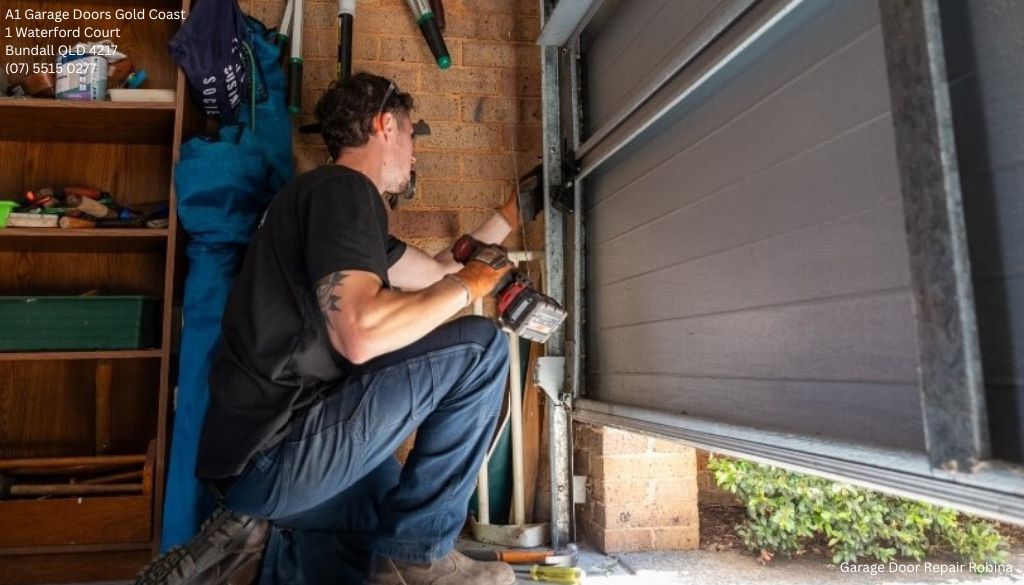
Installation and repair work around garage doors also involves practical physical hazards. Work often happens at ceiling height, in cramped spaces, with hand tools, and in awkward postures. Even when the task looks simple from the floor, the work environment increases risk. A ceiling-mounted opener may require ladder work, overhead fastening, electrical awareness, and careful alignment. Those conditions are a good reason to approach garage door installation and garage door sources repair in stages rather than rushing through the job.
A professional technician brings more than tools. A good one understands how the opener, door balance, sensors, tracks, rollers, cables, and springs affect one another. That system view matters. Replacing an opener without addressing a binding door can leave the homeowner with a new motor and the same underlying problem. Adjusting opener force to overcome a mechanical issue can create a more dangerous setup if the safety system is not operating correctly.
Older openers and the question of replacement
Garage door replacement and garage door opener replacement are sometimes discussed as if they are the same decision. They are not. A door can be replaced while an opener remains, and an opener can be replaced while the door remains. The right choice depends on what is failing, what safety features are present, and whether the system as a whole operates properly.
The clearest red flag is a non-reversing opener or an opener without garage door spring replacement required entrapment protection. Automatic residential openers are required to include safety protection such as photoelectric sensors or an equivalent system. If an older opener does not have these protections, or if the safety system is not working reliably, replacement may be the safer and more practical path than repeated repair attempts.
There are also situations where a homeowner calls for an opener problem and learns the door itself is the bigger issue. A new garage door opener will not correct damaged tracks, failing rollers, poor balance, compromised cables, or spring problems. In those cases, garage door repair must address the mechanical condition before the opener can be judged fairly.
A full garage door replacement may enter the conversation when the door system has broader structural or functional issues. That decision requires an on-site evaluation. From a homeowner’s inspection standpoint, the key is to avoid deciding too narrowly. If the opener is struggling, do not assume the motor is weak. If the door is noisy, do not assume lubrication is all it needs. If the door reverses unexpectedly, do not assume the sensors are “too sensitive.” Each symptom needs context.
Children, remotes, and everyday garage habits
Some of the most important garage door safety practices are not technical. They are household habits. Children should understand that the garage door is not play equipment. They should not race under it, hang from it, press the wall button for fun, or retrieve toys from the doorway while it is moving. Remote controls should be kept out of their reach.
That guidance may sound basic, but it addresses a real pattern of risk. A remote control makes the door feel like a harmless appliance. Press a button and something happens across the room. For a child, that distance can hide the danger. The door is still moving with force, and safety systems should be treated as backups, not invitations to take chances.
Adults should model the same caution. Do not duck under a door that is closing because you are in a hurry. Do not wave a child through while the door is moving. Do not use the opener if you already know the sensors are misaligned or the reversal test failed. Household routines become normal quickly, and unsafe shortcuts become harder to correct once everyone gets used to them.
A practical habit is to keep the wall control in a place where small children cannot casually operate it and to store vehicle remotes securely. If a remote is lost, damaged, or acting unpredictably, address it rather than leaving it loose in the garage. The opener’s safety system is essential, but control of the opener matters too.
What to tell a repair professional
When a homeowner calls for garage door repair, clear observations save time. You do not need to diagnose the failure. In fact, overdiagnosing can send the conversation in the wrong direction. What helps most is a precise description of what happened, when it happened, and what safety checks failed.
For example, saying “the opener failed the reversal test this morning” is more useful than saying “the motor is bad.” Saying “the door starts down, stops, and reverses when nothing appears to be blocking the sensors” gives the technician a behavior to inspect. Saying “one sensor was knocked loose and now the door will not close normally” is practical and direct.
The same applies to mechanical symptoms. If the door looks uneven, say so. If you heard a sharp sound before the opener stopped working, mention it. If the opener seems to strain more than it used to, that matters. If garage door lubrication was recently done or a garage door installation was recently completed, that context can help the technician understand what changed.
The homeowner’s goal is to provide facts, not conclusions. A professional can then inspect the opener, sensors, door balance, springs, rollers, cables, and tracks as needed. That is how a service visit moves from guesswork to proper repair.
A practical inspection rhythm that homeowners can keep
The best inspection routine is one you will actually follow. A monthly safety reversal test is the anchor. Pair it with a quick sensor check and a short observation of the door’s movement. That rhythm does not require special equipment or a large block of time. It requires attention.
A seasonal garage cleanup is another natural moment to inspect the opener area. Clutter often creeps toward the sensor path. Boxes get stacked near the tracks. Yard tools lean into the door opening. A few minutes of clearing the area can prevent nuisance problems and make safety checks more reliable.
After any unusual event, inspect again. If a bike hits a sensor, if storage items fall against the track, if the door reverses unexpectedly, or if anyone reports that the opener sounded different, do not wait for the next monthly check. A garage door system is mechanical, and changes in behavior matter.
Here is a simple way to judge urgency:
That short triage helps separate minor inconvenience from safety concern. A remote that needs attention is annoying. A door that will not reverse is hazardous. A blocked sensor path is easy to correct. A bypassed sensor is not acceptable. A noisy roller may need maintenance. A spring or cable issue requires caution and professional service.
The value of inspection is prevention
A garage door opener inspection is not meant to make homeowners anxious. It is meant to put attention where it belongs. The most serious opener hazards are tied to failure of the door to reverse, missing or nonworking entrapment protection, and unsafe use around children. Those are preventable risks when homeowners test the system, respect the safety features, and call for help when the door fails a basic check.
The garage door is often the largest moving object in a home. The opener controls it, but the opener depends on sensors, adjustment, door condition, and user behavior. A well-maintained system feels ordinary because it works without drama. That ordinary reliability is earned through inspection.
When the door opens and closes smoothly, the sensors are clear, the reversal system passes its monthly test, and the remotes are kept away from children, the garage becomes safer without becoming complicated. When something fails, prompt garage door repair is not just about restoring convenience. It is about making sure the next press of the button does what it should, safely and predictably.