Garage Door Rollers Troubleshooting During Routine Inspection
A routine garage door inspection is not just a quick glance at whether the door opens and closes. It is a chance to notice small changes before they turn into a repair call, a stuck vehicle, or a safety problem. Garage door rollers deserve particular attention because they sit at the point where movement, weight, track alignment, opener force, and daily wear all meet.
When rollers are working properly, most homeowners barely think about them. The door travels in its garage door tracks with a steady motion, the garage door opener does not strain, and the system feels predictable. When rollers are worn, binding, loose, or not moving correctly, the symptoms can show up in several places at once. A noisy door may be blamed on the opener. A jerky door may be blamed on the springs. A reversal problem may be blamed on garage door sensors. In practice, the roller inspection helps separate one issue from another.
The most important point is safety. A residential automatic garage door opener is expected to have entrapment protection, such as photoelectric sensors or an equivalent safety system. A properly functioning opener should reverse when the closing door meets an obstruction. Non-reversing openers are a known hazard, and the safety reversal system should be tested monthly. If the door fails that test, it should be adjusted according to the owner’s manual or inspected by a professional. Roller troubleshooting should never become an excuse to overlook those safety checks.
Why rollers matter more than they seem
Garage door rollers guide the door as it moves through the tracks. They do not work alone. The door’s balance, the garage door springs, the condition of the garage door cables, the alignment of the garage door tracks, and the behavior of the opener all influence how the rollers perform.
That is why roller trouble often appears as a system problem rather than a single obvious failure. A door that chatters on the way down may have a roller issue, but it may also be fighting the track. A door that starts down and reverses may have a safety system issue, an obstruction, or a movement problem that causes the opener to react. A door that feels unusually heavy when disconnected from the opener points attention toward garage door balance and spring function, not just the rollers.
A good inspection does not jump to conclusions. It observes the door under controlled conditions, listens to the sound, watches the travel, and separates opener behavior from the door’s mechanical movement. That is the difference between practical garage door troubleshooting and guessing.
Start with the door, not the opener
Many homeowners begin troubleshooting by pressing the remote repeatedly. That usually makes the situation less clear. The opener is only one part of the system. It can reveal a problem, but it can also mask one by pulling or pushing through resistance until the safety system intervenes.
A professional inspection starts by watching the full cycle from a safe position. The door should move smoothly. The sound should be consistent. The sections should not appear to shudder, lean, or hesitate as they travel. If the door moves normally for most of the cycle but acts up at the same point each time, the problem may be tied to a specific area of track travel. If the behavior changes from cycle to cycle, the inspection needs to broaden.
Garage door opener behavior also matters. Automatic residential openers are covered by a mandatory safety standard that requires entrapment protection. The photoelectric “electric eye” sensors, or equivalent safety protection, are not accessories. They are part of the safety system. If the opener refuses to close, reverses unexpectedly, or behaves differently depending on lighting, objects near the doorway, or alignment of the sensor area, the inspection should include the garage door sensors before anyone focuses only on rollers.
That said, roller problems can still affect opener performance. A binding door can make an opener work harder. A door that does not travel freely can trigger reversal behavior. The mistake is assuming the opener is defective just because the opener is the part making noise.
A safe routine inspection sequence
A routine garage door inspection should be calm, deliberate, and staged. The goal is not to dismantle the system. It is to identify symptoms, confirm basic safety functions, and decide whether the door can be maintained or needs professional garage door repair.
Use this short sequence when inspecting roller behavior as part of routine garage door maintenance:
That list is intentionally conservative. Garage doors are heavy moving systems, and inspection work often happens at ceiling height, in tight spaces, and around tools, brackets, tracks, and opener components. Repair and installation work can involve awkward postures and physical hazards. A rushed inspection can turn affordable spring replacement a small maintenance question into an injury risk.
What to watch for when rollers are moving
A roller should follow the track without drama. It should not appear to jump, twist, bind, or drag. The door should not look as though it is being forced around a tight spot. During inspection, the most useful view is often from inside the garage, standing off to the side where the full track path can be seen without being under the door.
Watch the rollers at the lower sections, the middle hinge area, and the curved portion of the track. The curve is where movement changes direction, so symptoms often become easier to see there. If the door hesitates or shudders at the same spot, the roller and track relationship deserves closer attention. If the roller appears to ride unevenly or the track looks disturbed, avoid pushing, prying, or bending components during a casual inspection. Track and roller problems can be connected to door balance, cable tension, and spring force.
Sound gives useful clues, but it should not be overinterpreted. A scraping sound suggests contact where movement should be smooth. A grinding sound may point toward a roller that is not turning properly. A rhythmic clicking can come from a roller, hinge, track joint, or another moving part. A single loud pop during travel should be treated seriously, especially if the door’s motion changes afterward.
The best practice is to note where the sound occurs. Does it happen near the floor, along the vertical track, through the curve, or near the open position? Does it occur only during closing, or during both opening and closing? Those observations help a technician distinguish roller wear from garage door tracks, garage door cables, garage door springs, or opener-related problems.
Roller symptoms that can be mistaken for other issues
Garage door systems are good at hiding the original cause of a problem. A small amount of binding can make the opener sound strained. Poor door balance can make the rollers look guilty because they are the parts visibly moving in the tracks. A sensor issue can make the door reverse, leading someone to inspect the rollers even though the entrapment protection is actually doing its job.
This is why routine inspection should include the whole system. Garage door rollers are part of the story, not the whole story.
If a door starts to close and then reverses, do not immediately adjust the opener or blame the rollers. First confirm the safety system is clear and aligned, and that the photoelectric sensor path is not blocked. Safety systems exist because closing doors can create entrapment hazards. If the door fails to reverse during a safety test, that is not a minor nuisance. It is a condition that should be corrected according to the owner’s manual or inspected by a professional.
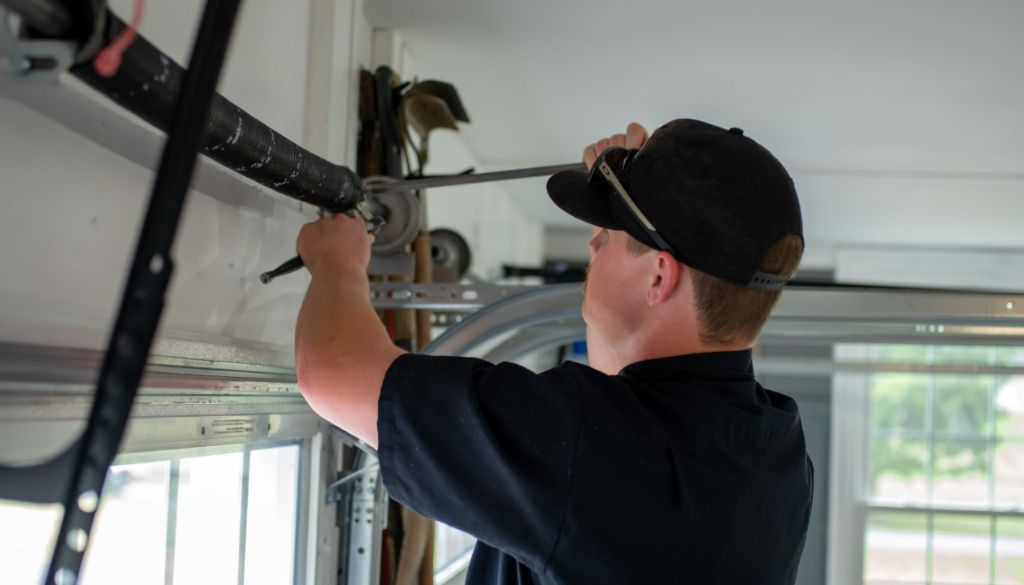
If the opener runs but the door moves poorly, the inspection should shift to mechanical movement. Binding in the tracks, roller issues, door balance problems, spring concerns, and cable problems can all affect travel. Garage door springs, including torsion springs, are not casual homeowner repair items. They are part of the counterbalance system, and problems there can change how the entire door behaves.
If the door is noisy but otherwise travels correctly, garage door lubrication may be part of routine maintenance, but lubrication should not be used as a way to hide a defect. A roller that is damaged, a track that is misaligned, or a door that is out of balance needs diagnosis, not just oil.
The monthly safety reversal check belongs in the same routine
Roller troubleshooting is mechanical, but garage door safety is broader than mechanics. Automatic residential garage door openers must include entrapment protection such as a photoelectric sensor or an equivalent safety system. The safety reversal system should be tested monthly. That monthly habit fits naturally with a visual inspection of rollers, tracks, cables, and the door’s travel.
The reversal test matters because a non-reversing garage door opener is a hazard. A properly working opener should reverse when the closing door contacts an obstruction. If it does not, the opener should not simply be trusted because it worked yesterday. The owner’s manual should be followed for adjustment, or a professional should inspect the system.
Children should also be taught garage door safety, and remote controls should be kept out of their reach. That may seem separate from roller inspection, but it belongs in the same conversation. A door with mechanical drag, questionable reversal behavior, or sensor problems should not be treated as a harmless inconvenience. The garage door is often the largest moving object in a home, and routine habits make the difference between a manageable maintenance issue and a preventable hazard.
Looking at the tracks without overstepping
Garage door tracks guide the rollers, so no roller inspection is complete without looking at them. The tracks should allow consistent movement through the vertical run and the curved transition. Any obvious obstruction, bent area, loose-looking hardware, or unusual contact point deserves attention.
The key phrase is “looking at them.” Routine inspection is not the same as forceful adjustment. Tracks, brackets, rollers, cables, and springs function as a connected system. Moving one part can affect another. If a track garage door sources appears out of position or the door is rubbing hard, that condition should be evaluated carefully. A professional garage door repair technician can determine whether the track needs adjustment, whether a roller has failed, whether the door is out of balance, or whether another component is causing the track issue.
Homeowners sometimes try to solve rubbing by bending the track with pliers or striking it with a hammer. That can create new problems. A track that looks slightly off may be responding to load from another part of the system. For example, a door that is not balanced correctly can move unevenly and make one side seem like the problem, even when the root cause is elsewhere.
During a routine inspection, record what you see. If the door hesitates at a certain height, note the approximate location. If one side is louder than the other, note that. If the symptom occurs only while closing, that matters. Good observations shorten the diagnostic process and reduce the temptation to make random adjustments.
The role of door balance in roller troubleshooting
Garage door balance is one of the most important concepts in diagnosing roller complaints. A balanced door moves more predictably. An unbalanced door can strain the opener, affect the rollers, and make the door feel unstable.
The springs carry much of the load that would otherwise make the door difficult to lift. When garage door springs are not doing their job properly, the rollers may show the symptoms. The door may move unevenly, slam, rise too quickly, or feel heavy. Torsion springs and related counterbalance components should be treated with respect. Their condition affects the entire system.
A routine inspection can note balance-related symptoms without turning into a spring repair. If the door appears to drift, slam, or resist movement, those observations should be taken seriously. If a homeowner is not familiar with safe testing procedures from the owner’s manual, professional inspection is the better path. Garage door safety depends on knowing when to stop.
Roller replacement alone will not fix a balance problem. This is a common trap. New rollers may make the door quieter for a short time, but the underlying strain remains. If the opener is compensating for a poorly balanced door, other components may continue to wear or behave unpredictably.
When lubrication helps, and when it does not
Garage door lubrication is a normal part of maintenance, but it has limits. Lubrication can reduce friction and noise where moving parts are designed to move. It cannot restore a damaged component, correct a track problem, repair a cable issue, or make an unsafe opener safe.
During roller troubleshooting, lubrication should be approached as maintenance after inspection, not as the first move. If a roller is visibly damaged, if the door binds, or if the opener reverses unexpectedly, adding lubricant may make the symptom quieter without making the system safer. That is not a repair.
A practical approach is to inspect first, clean obvious debris from safe-to-reach areas, confirm the safety systems, and then perform lubrication only where appropriate under the door or opener manufacturer’s guidance. If the owner’s manual gives specific instructions, follow those. If it does not, or if the door shows signs of binding or unsafe movement, bring in a professional.
The trade-off is simple. Lubrication is inexpensive and useful for routine garage door maintenance, but it can create false confidence. A quieter bad roller is still a bad roller. A smoother-sounding unbalanced door is still unbalanced. A door that fails a reversal test is still unsafe.
Cables, springs, and rollers: the triangle of caution
Garage door cables and springs deserve special attention during any inspection because they are linked to the door’s lifting and counterbalance function. Roller trouble can overlap with cable or spring trouble in the way it appears. A door may lean, move roughly, or bind in a way that seems track-related. The visible symptom may be a roller struggling in the track, while the underlying issue involves cable tension or spring performance.
This is where judgment matters. A homeowner can safely observe many symptoms from a distance, but should not treat all visible parts as safe to handle. If a cable looks wrong, if a spring appears damaged, or if the door’s movement changes suddenly, stop operating the door and call a professional. Continuing to run the opener can worsen the condition.
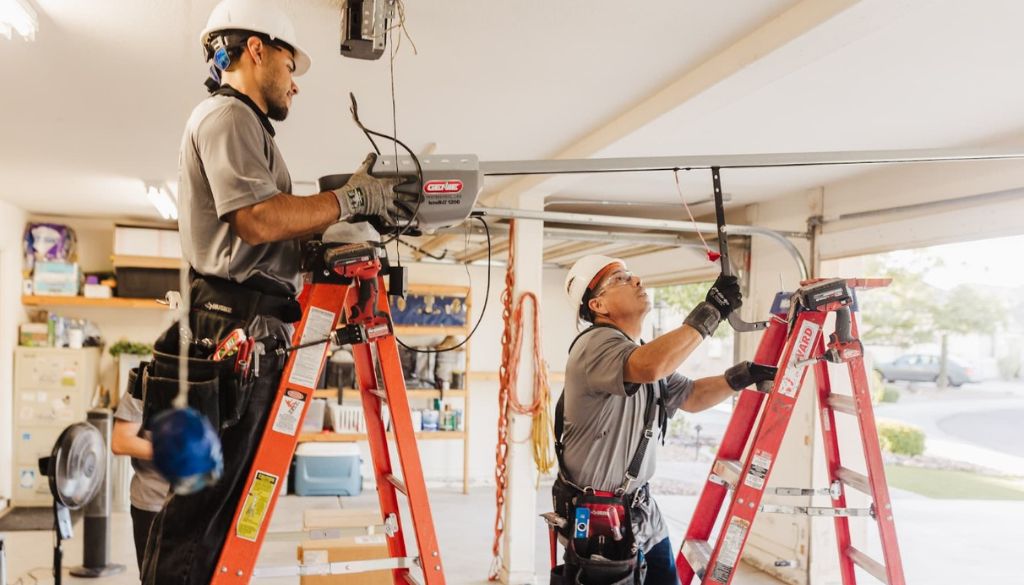
Repair work around garage doors also brings practical job-site hazards. Work may occur overhead, near ceiling-mounted equipment, inside cramped garage spaces, and with hand tools in awkward body positions. Experienced technicians stage their work carefully because they understand how quickly a minor slip can become serious. That same caution should guide a homeowner’s inspection.
A brief field example: the “bad opener” that was not
One service call pattern is familiar. The homeowner reports that the garage door opener is failing because the motor sounds strained and the door reverses halfway down. The remote works. The wall button works. The lights behave normally. The assumption is that the opener is worn out.
On inspection, the opener may be responding to resistance in the door’s travel. The problem could involve a roller binding in the track, a track issue, door balance, or another mechanical fault. In a case like that, replacing the opener first would be the wrong order of work. A new opener attached to a door that does not move properly inherits the same problem.
The reverse can also happen. A door may move freely, but the opener refuses to close because the safety sensors are not functioning as required. If the photoelectric sensor system is blocked, misaligned, or otherwise not working, the door’s behavior may mimic a mechanical fault. That is why roller inspection and sensor verification belong together.
Good troubleshooting asks, “Is the door moving correctly, and is the opener’s safety system working correctly?” Both questions matter. Answering only one invites misdiagnosis.
When roller inspection points toward replacement
Garage door replacement is not the normal answer to a roller problem. In many cases, a targeted repair or maintenance visit is enough. Still, a routine inspection can reveal broader issues. If the door has repeated mechanical problems, damaged sections, unreliable movement, or safety concerns that cannot be resolved through adjustment and repair, replacement may enter the discussion.
Garage door installation quality also affects roller performance over the long term. A door that was poorly installed may never travel as smoothly as it should. Track position, opener setup, door balance, and safety system installation all influence daily operation. When an existing door has chronic roller and track complaints, it is worth asking whether the system was set up correctly from the beginning.
Replacement should be considered with practical judgment, not fear. A noisy roller does not automatically justify a new door. A door with repeated safety failures, significant mechanical defects, or unreliable operation deserves a more serious conversation. The right decision depends on the condition of the door, the opener, the tracks, the springs, and the safety equipment.
What a professional looks for during a service visit
A professional garage door inspection usually moves from observation to isolation. The technician watches the door operate, checks whether the opener and safety systems behave correctly, evaluates the mechanical travel, and looks for signs that one component is affecting another. The goal is not just to make the symptom disappear. It is to restore reliable and safe operation.
During a roller-related service call, these are the kinds of findings that often shape the recommendation:
A good technician should be able to explain the relationship between the symptom and the recommended repair. If the diagnosis is “bad rollers,” the explanation should include what the rollers are doing wrong and whether the tracks, balance, cables, springs, opener, and sensors were checked. If the recommendation is more extensive, the technician should be able to explain why the roller issue is only one part of the problem.
Avoiding the most common inspection mistakes
The first mistake is operating the door repeatedly after a serious symptom appears. If the door binds, jerks, hangs crooked, or fails a safety reversal test, repeated cycles do not help. They add strain and risk.
The second mistake is treating the opener as the source of every problem. The garage door opener moves the door, but it depends on the door being mechanically sound. A door with poor balance or roller resistance can make a healthy opener look weak.
The third mistake is ignoring garage door sensors. Since automatic residential openers require entrapment protection such as photoelectric sensors or an equivalent safety system, those devices are part of the inspection, not an afterthought. A closing problem may be the safety system doing its job, or it may be a sign that the safety system needs attention.
The fourth mistake is using lubrication as a substitute for diagnosis. Lubrication belongs in maintenance, but it should not be used to silence a symptom that needs repair.
The fifth mistake is underestimating the hazards of overhead work. Even simple-looking garage door repair tasks can involve awkward positions, hand tools, ceiling-height components, and cramped garage conditions. Caution is not overkill. It is part of doing the work properly.
Building roller checks into routine maintenance
The best roller inspections are boring. The door opens. The door closes. The rollers move smoothly. The opener reverses when it should. The sensors are present and functioning. Nothing scrapes, binds, or surprises you.
That kind of boring result comes from regular attention. Monthly safety reversal testing should be part of ownership. Visual inspection of rollers, tracks, cables, and door movement can happen at the same time. If the door’s sound changes, if movement becomes uneven, or if the opener starts behaving differently, do not wait for a complete failure.
Routine garage door maintenance is not about taking the system apart. It is about knowing what normal looks and sounds like. Once you know the baseline, small changes stand out. A new scrape near the track curve, a slight hesitation on the way down, or a reversal that happens only at one point in travel can all guide timely garage door troubleshooting.
The final judgment is simple: observe carefully, test safety systems consistently, maintain only what is appropriate, and call a professional when the issue reaches springs, cables, balance, unsafe movement, or failed reversal behavior. Garage door rollers may be small parts of the system, but the way they move tells you a great deal about the health of the entire door.