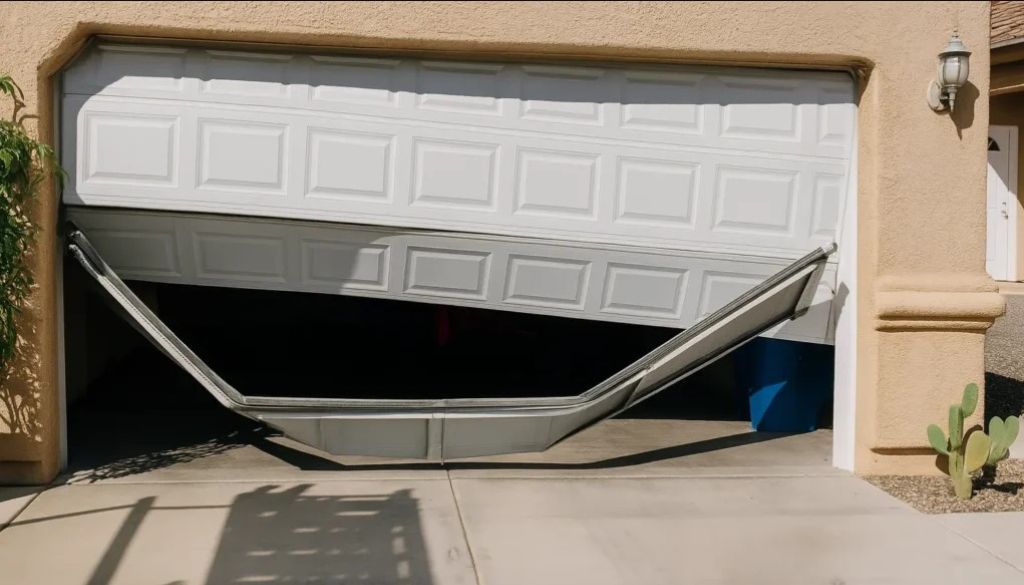
Garage Door Safety Guide for Families and Homeowners
A garage door is one of the largest moving objects in a home, and for many families it operates several times a day with very little thought. It opens when someone leaves for work, closes after school drop-off, lifts again for bikes, trash bins, groceries, deliveries, yard tools, and weekend projects. That routine can make the system feel harmless. The risk is not in ordinary use when everything works correctly. The risk appears when a safety feature has failed, a child treats the door like playground equipment, or a homeowner tries to adjust a system without understanding the hazards involved.
Garage door safety deserves the same seriousness as electrical safety, pool safety, or smoke alarm maintenance. The most important point is simple: an automatic residential garage door opener must be able to protect against entrapment. In the United States, residential automatic garage door openers are covered by a mandatory federal safety standard requiring entrapment protection, such as a photoelectric “electric eye” sensor or an equivalent safety system. That requirement exists because non-reversing doors have caused fatal incidents. The safety equipment is not decorative, optional, or merely convenient. It is there to prevent a closing door from trapping a person, especially a child.
The good news is that families can reduce risk with consistent habits, monthly safety checks, and good judgment about when to call a trained professional for garage door repair. The harder truth is that some problems should not be treated as weekend trial-and-error projects. Garage door springs, torsion springs, garage door cables, overhead hardware, and opener adjustments can involve forces and work positions that create real danger. Safe ownership means knowing the system, testing what should be tested, and stepping back when the issue calls for experience.
Why garage door safety starts with the opener
The garage door opener is often mistaken for the muscle of the system. In reality, the door, springs, tracks, rollers, cables, and opener work together. The opener controls movement, but the door system has its own mechanical balance and hardware. When everything is in good condition, the opener guides the door through a controlled cycle. When something is out of adjustment, worn, blocked, or misaligned, the opener may still try to move the door, and that is when safety systems matter most.
Automatic residential garage door openers are required to include entrapment protection. The most familiar form is a pair of photoelectric garage door sensors mounted near the lower portion of the door opening. These sensors project an invisible beam across the opening. If something breaks the beam while the door is closing, the opener should stop and reverse. Some systems may use an equivalent safety method, but the homeowner’s responsibility remains the same: confirm that the safety reversal protection is present and working.
A properly functioning opener should also reverse when the door closes onto an obstruction. This is a crucial difference. Photoelectric sensors help prevent the door from reaching an object or person in the path. The reversing function addresses what happens if the door contacts an obstruction. Both forms of protection matter because real life is messy. A box can sit just above the sensor line. A bicycle tire can protrude into the path. A child can move quickly and unpredictably. Safety should not depend on a single perfect condition.
Monthly testing is the practical baseline. If a door fails to reverse during a safety check, the opener should be adjusted according to the owner’s manual or inspected by a professional. That is not an area where guesswork is acceptable. A non-reversing opener is a known hazard, and continuing to use it as if it were normal turns a correctable problem into an ongoing risk.
The family rules that matter most
Garage door safety in a home with children depends as much on habits as hardware. A working sensor can reduce risk, but it cannot replace supervision or clear rules. Children should be taught that the garage door is not a toy, not a race timer, not something to duck under, and not something to hang from. That message needs to be repeated calmly and consistently, the same way parents repeat seat belt rules.
Remote controls should be kept out of children’s reach. Wall controls should be treated with the same seriousness. Many children are fascinated by buttons that move large objects, and curiosity often wins when adults are distracted. A remote clipped to a visor, left on a low shelf, or tossed into an open bag may be easy for a child to grab. The safest approach is to treat the remote like any other household control that can create danger if misused.
Pets deserve attention as well. A dog may dart under a closing door when it hears a family member outside. A cat may hide near stored items in the garage. The photoelectric sensors help, but they are not permission to close the door without looking. The basic habit is to watch the door until it fully closes when people, children, or animals are nearby. It takes only a few seconds, and it prevents the common mistake of pressing a button and walking away.
For families, the best rules are short enough to remember and firm enough to enforce.
Those five rules cover most household situations. The goal is not to make children afraid of the garage. The goal is to remove the casual behavior that leads to avoidable incidents.
Monthly testing should become a household routine
A garage door inspection does not need to be complicated to be useful. The most important safety checks are the ones that confirm the opener’s entrapment protection is working. Since safety reversal systems should be tested monthly, it helps to attach the habit to something already on the calendar, such as changing HVAC filters, reviewing smoke alarms, or paying the mortgage. The exact timing matters less than the consistency.
Start with the photoelectric sensors. They should be present if the door uses that form of entrapment protection, and they should be aligned and functioning. If the door is closing and the sensor beam is interrupted, the door should stop and reverse. If it does not, the garage door opener should not be treated as safe until the issue is corrected.
Next, confirm that the door reverses when closing onto an obstruction, following the method described in the owner’s manual for that specific opener. Different openers may have different testing and adjustment instructions, so the manual matters. A homeowner should not rely on memory, internet guesses, or assumptions from an older opener. If the opener fails the test, the guidance is clear: adjust it according to the owner’s manual or have it inspected by a professional.
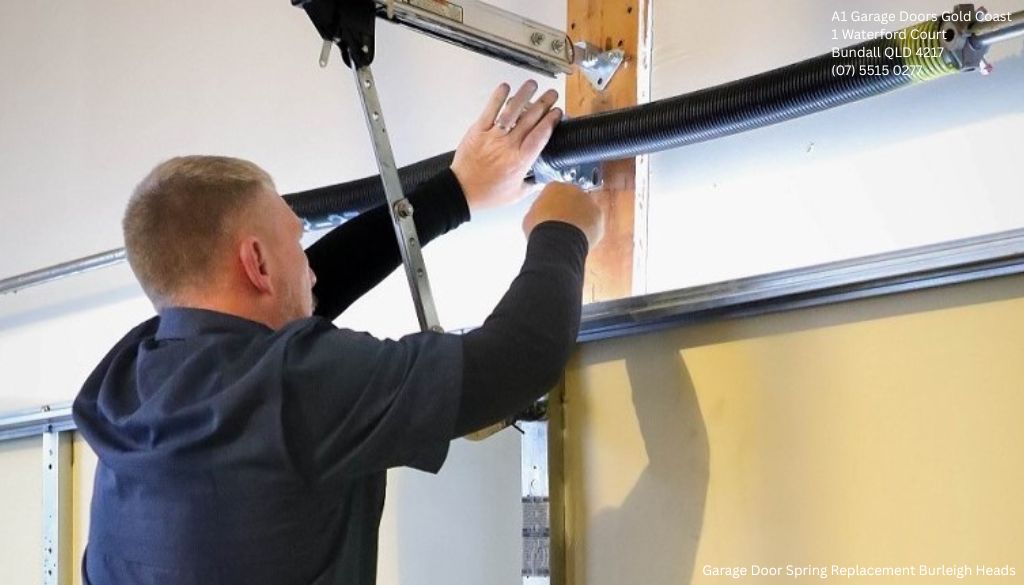
The monthly check is also a good time to notice changes. Does the opener sound strained compared with last month? Does the door hesitate? Does it move unevenly? Do the garage door rollers appear to bind in the garage door replacement services garage door tracks? Are the sensors loose, blocked, or knocked out of position? These observations do not require the homeowner to diagnose the entire system. They simply help identify when garage door troubleshooting should stop being casual and become a service call.
A common mistake is waiting until the door will not move at all. Safety problems often announce themselves before a full breakdown. A door that reverses for no obvious reason may have a sensor issue. A door that does not reverse when it should may have a much more serious opener problem. A door that strains, jerks, or moves unevenly may have mechanical issues unrelated to the opener. The earlier those signs are addressed, the less likely the family is to keep using an unsafe system.
What homeowners can safely observe
There is value in knowing the visible parts of the door system, even if you never intend to perform garage door repair yourself. A homeowner who can describe the problem clearly helps a technician work more efficiently and avoids turning a minor issue into a larger one through repeated operation.
The garage door tracks guide the door as it moves. Garage door rollers travel through those tracks. Garage door cables and springs help manage the door’s weight. Many residential systems use torsion springs, which are mounted above the door opening. The garage door opener connects to the door and controls opening and closing, but it should not be expected to overcome a poorly balanced or mechanically compromised door.
Garage door balance is especially important because it affects how the whole system behaves. A balanced door works with the opener rather than against it. An unbalanced door can strain the opener and create unpredictable movement. That does not mean a homeowner should attempt spring adjustment. Garage door springs, including torsion springs, are not ordinary household hardware. They are part of a system designed to counterbalance a heavy moving door, and improper handling can be dangerous.
Homeowners can safely look for obvious warning signs without touching or adjusting high-tension components. A frayed cable, a door that sits crooked, rollers that have come out of the track, or hardware that appears loose should be treated as a reason to stop using the door and call for professional garage door repair. If the door is stuck open, the temptation is to force it closed for security. If it is stuck closed, the temptation is to force it open for convenience. Both reactions can make a hazardous situation worse.
Garage door lubrication is another area where judgment matters. Many homeowners know that moving hardware may need lubrication as part of garage door maintenance, but not every noise means “spray something on it,” and not every part should be treated the same way. The safest approach is to follow the manufacturer’s instructions for the door and opener, and to avoid using lubrication as a substitute for inspection. A door that binds, jerks, or fails a reversal test has a safety issue, not just a squeak.
When troubleshooting becomes a safety problem
Garage door troubleshooting has limits. Checking whether the opener has power, confirming that nothing is blocking the photoelectric sensors, and making sure the remote control has not been misused are ordinary homeowner observations. Adjusting force settings, working near overhead components, handling springs, or trying to realign damaged tracks moves into more serious territory.
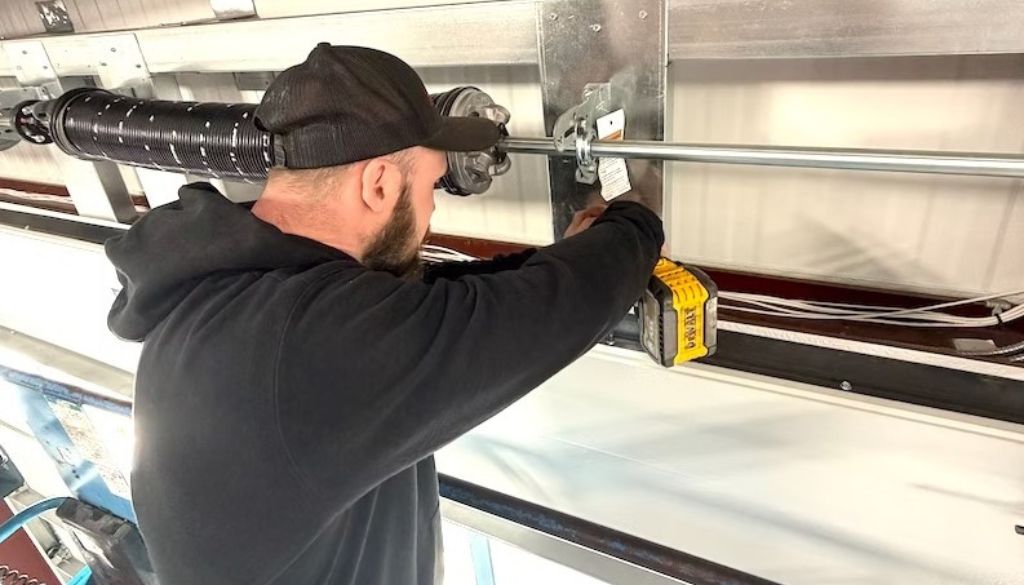
Installation and repair work around garage doors often happens at ceiling height, in tight spaces, with hand tools, awkward body positions, and heavy components nearby. Those conditions increase the chance of slips, strains, and mistakes. Even experienced tradespeople stage the work carefully because the environment itself is part of the hazard. A ladder in a crowded garage, tools on the floor, stored items leaning against the wall, and a half-open door all add complexity.
The professional tone here is deliberate: some jobs are not worth the risk. If a garage door opener fails to reverse, if the door moves unevenly, if cables or springs look damaged, or if the door cannot be operated normally, the safer choice is to stop and schedule an inspection. A trained technician can evaluate the opener, sensors, springs, rollers, tracks, cables, and door balance as a system. A homeowner working from fragments of advice may fix one symptom while missing the condition that caused it.
There is also a difference between maintenance and repair. Garage door maintenance focuses on preserving safe operation: regular inspection, monthly reversal testing, attention to sensors, and professional service when warning signs appear. Garage door repair addresses something that is already wrong. Garage door replacement or garage door installation becomes relevant when the existing equipment can no longer be made safe or reliable, or when the homeowner is upgrading an older system. Each category calls for a different level of skill.
The opener should not be treated as a safety override
One of the most dangerous assumptions is that the opener will simply stop if something is wrong. Safety systems reduce risk only when they are installed, maintained, and tested. A non-reversing opener is not safe because it still moves. A sensor that is present but not functioning is not protection. A remote that children can reach is not harmless because adults “usually” supervise.
The federal safety standard for automatic residential garage door openers exists because automatic movement changes the risk profile of a garage door. A manually operated door requires a person to be physically present and engaged. An automatic opener allows the door to move at the push of a button, sometimes from inside a vehicle or another part of the home. That convenience is exactly why entrapment protection matters.
Older habits can linger. Some homeowners grew up with garage doors that had fewer safety features, or with openers that were treated like simple motors. Modern expectations are different. If your system uses photoelectric sensors, they should not be bypassed because the door is “acting up.” If the door reverses unexpectedly, the answer is not to defeat the sensor so the door will close. The answer is to find out why the safety system is responding.
A bypassed or ignored safety feature creates a false sense of control. The door may close today, but the household has traded an inconvenience for a hazard. That is a poor bargain, especially in a home with children, pets, frequent visitors, or anyone who may not understand the door’s condition.
A practical monthly safety check
A short, repeatable check is easier to keep than an elaborate one. The point is not to become a technician. The point is to confirm the safety features that protect people from entrapment and to identify changes that deserve professional attention.
This is the kind of checklist that belongs near the door, in a home maintenance binder, or on a recurring calendar reminder. It is short because safety routines work best when people actually follow them.
Garage door installation and replacement deserve planning
Garage door installation is not just a cosmetic upgrade. A new door, opener, or complete system should be planned around safe operation from the beginning. The opener must include required entrapment protection, such as photoelectric sensors or an equivalent safety system. The installation should also account for the space around the door, the condition of the tracks, the opener location, and the realities of how the family uses the garage.
A garage crowded with storage boxes, sports equipment, bicycles, and lawn tools creates more opportunities for objects to block sensors or interfere with the door path. Families often think about the door itself during garage door replacement, but the surrounding environment matters. A safe installation leaves room for the door to move without household clutter migrating into the tracks, sensor path, or operating area.
Professional installation also reduces the risks tied to overhead work. Installing or replacing a garage door opener may require work at ceiling height and in awkward positions. Repair and installation environments can be cramped, and tool use overhead adds difficulty. Those facts do not mean homeowners are incapable of learning. They mean the job carries hazards that should be weighed honestly against the value of professional experience.
If you are replacing an older opener, treat the project as a safety improvement, not just a convenience upgrade. The most important question is not whether the new opener is quieter or faster. The first question is whether the entrapment protection is installed correctly and tested. Convenience features are secondary to safe reversal and reliable sensor function.
The signs that call for professional inspection
Most homeowners do not need to know how to rebuild a garage door system. They do need to know when to stop operating it. That moment arrives sooner than many people think. A door that fails to reverse during a monthly test should be taken seriously right away. So should a door that closes despite an interrupted sensor beam. Those are direct safety failures.
Mechanical symptoms deserve the same respect. If garage door cables appear damaged, if the door hangs at an angle, if rollers bind in the tracks, or if the opener strains to move the door, continued operation can worsen the condition. The opener may still respond to the remote, but that does not mean the system is safe. It means the motor is still trying.
Spring-related concerns should be referred to a professional. Garage door springs and torsion springs are not components to casually loosen, tighten, remove, or adjust. The danger is not always obvious from the floor. A homeowner may see a metal spring and a few brackets. A technician sees stored force, door balance, cable tension, and the consequences of an error.
There is also a practical household issue: a garage door often controls access to vehicles, tools, and the home itself. When it fails, stress rises. People rush because they need to leave for work or secure the house at night. Rushed repair decisions are rarely safe repair decisions. If the situation is urgent, the safest response is still to avoid forcing the door and contact a qualified service provider.
Teaching safety without creating fear
Children learn from repetition and from watching adults. If adults duck under a moving garage door, children will assume that is allowed. If adults press the remote and walk away without looking, children will see the door as automatic background movement. Safe habits need to be visible.
A good rule in family homes is that the person who presses the button owns the cycle. That means watching until the door finishes moving, especially when children or pets are nearby. It also means not using the opener as a signal for children to race outside. The garage door should not become part of a game.
Explain the sensors in simple terms. Children do not need a technical lecture about photoelectric beams, but they can understand that the small devices near the bottom of the door help the door know when something is in the way. They should also understand not to kick them, twist them, cover them, or treat them as toys. If a child notices that the door did not reverse or that a sensor looks broken, praise the child for reporting it and keep the door out of use until an adult checks it.
Remote controls deserve special discipline. A remote left where a child can reach it invites experimentation. Even if the opener works correctly, repeated unsupervised operation is not safe. Keep remotes stored like functional controls, not casual accessories.
The homeowner’s best safety mindset
Garage door safety is not a one-time setup. It is a pattern: install the right safety equipment, test it monthly, teach children clear rules, watch for changes, and bring in a professional when the problem exceeds ordinary homeowner observation. That pattern is simple, but it requires consistency.
The most reliable homeowners I have seen are not the ones who try to fix everything themselves. They are the ones who know their limits. They notice when the door sounds different. They test the reversal system without being reminded. They do not bypass sensors to get through a busy morning. They keep remotes away from children. When the door fails a safety check, they stop using it and arrange proper garage door repair.
A garage door can serve a home safely for years when its safety systems are respected. The monthly test takes little time. The family rules are easy to teach. The decision to call a professional may prevent a serious injury and can protect the opener, tracks, rollers, cables, springs, and door from additional damage. Safety is not about being alarmed every time the door moves. It is about refusing to let a familiar machine become invisible.
The door should open when you ask it to open, close when the path is clear, reverse when safety demands it, and remain out of service when it cannot do those things. That standard is reasonable, practical, and worth maintaining in every home.