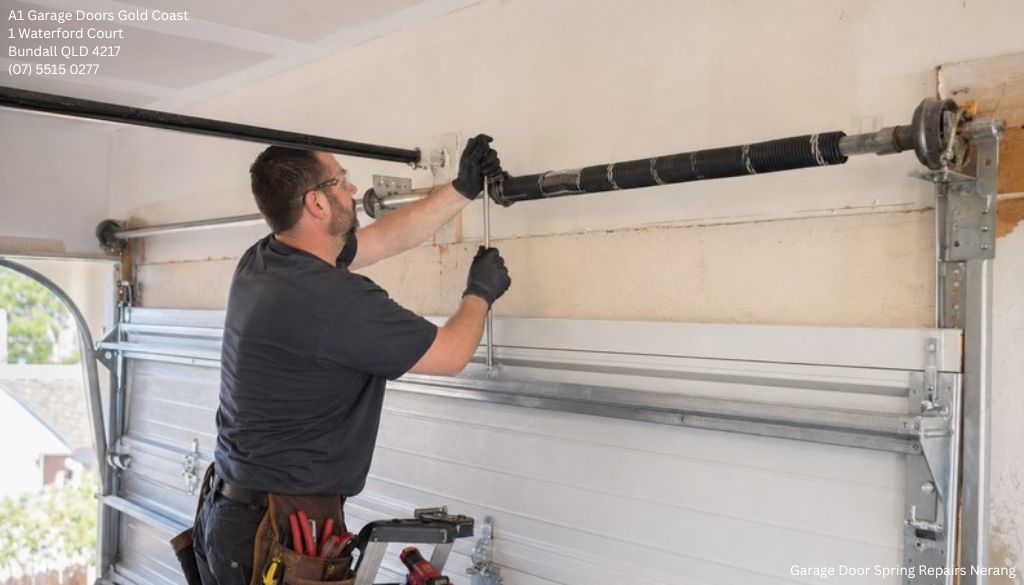
Torsion Springs Inspection Guide for Garage Door Owners
A garage door looks simple from the driveway. Press the wall button, the door rises. Press it again, the door closes. When everything works, most owners barely think about the parts above the opening, along the tracks, or near the ceiling. That quiet reliability is exactly why garage door maintenance often gets postponed until something feels wrong.
Torsion springs deserve more respect than that. They are part of the lifting system that helps a heavy garage door move in a controlled way. When they are neglected, the first sign of trouble may not be subtle. The door may strain, move unevenly, stop partway, or refuse to open. In other cases, the opener keeps trying to do work the door system is no longer helping it do, which can turn a spring issue into broader garage door repair.
This guide is written for homeowners who want to inspect their garage door springs with sound judgment, not false confidence. A visual garage door inspection can tell you a lot. It can help you recognize changes, catch obvious warning signs, and know when to stop using the door until a professional evaluates it. It should not turn into a do-it-yourself spring adjustment. Torsion springs are under force, and the safest inspection is one that keeps your hands, tools, and curiosity out of the danger zone.
Why torsion springs matter to the whole door system
A residential garage door is not just a slab on hinges. It is a moving system made up of springs, cables, rollers, tracks, brackets, sensors, an opener, and the door sections themselves. Each part affects the others. If the spring system is not doing its job, the garage door opener may sound louder or work harder. If the garage door tracks are bent or obstructed, the door can bind and place extra strain on the lifting system. If garage door rollers drag or wobble, movement becomes rougher. If garage door cables look uneven or damaged, the door may not travel squarely.
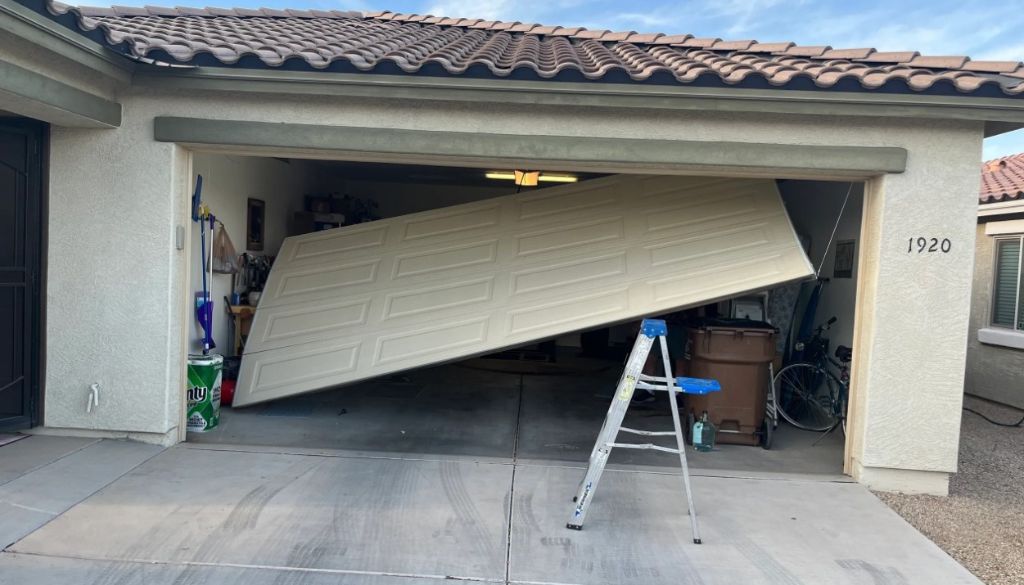
Torsion springs are easy to overlook because they are usually mounted above the door opening, not down where a homeowner naturally looks. Many people notice the opener first because it has a motor, a light, and a remote. Yet the opener is not meant to be a substitute for a properly balanced door. A healthy door system should move in a controlled, predictable way. When the balance is off, the opener can mask the problem for a while, but it does not remove the underlying issue.
That is why spring inspection belongs in the same conversation as garage door safety. A door that does not move properly can become more than an inconvenience. Federal safety rules for automatic residential garage door openers exist because closing doors can create entrapment hazards. Modern automatic openers must include entrapment protection, such as photoelectric sensors or an equivalent safety system. Those garage door sensors are not a spring inspection tool, but they are part of the same safety mindset: the door should move correctly, and the safety systems should respond correctly when something is in the way.
What homeowners can inspect safely
The word “inspection” can mean different things. For a homeowner, it should mean looking, listening, and testing basic operation from a safe position. It should not mean loosening hardware, winding springs, removing parts, or trying to correct spring tension. Professional garage door repair work happens around heavy parts, ceiling-height equipment, cramped spaces, hand tools, and awkward body positions. Those conditions carry real physical hazards even for trained workers. For homeowners, the safest line is clear: observe the spring system, do not service it.
Start with the door closed. Stand inside the garage with good lighting and look above the door opening. The torsion spring assembly is typically in that area on doors that use torsion springs. You are not trying to identify every component or diagnose the exact failure. You are looking for visible changes, asymmetry, loose-looking parts, unusual gaps, signs that the door has shifted, or anything that seems different from the last time you looked.
A basic homeowner inspection should include a slow scan of the spring area, the cables near the sides of the door, the rollers inside the tracks, and the path of the door as it opens and closes. Watch from a safe distance. Keep children and pets away while you are inspecting. If the door is already acting strangely, avoid repeated test cycles. Each operation can add stress to a system that may already be compromised.
One practical habit is to inspect the door when nothing is urgent. Do it on a quiet Saturday morning, not when you are late for work and the car is trapped inside. You make better decisions when you are not trying to force the door to cooperate.
Signs that may point to torsion spring trouble
Torsion spring problems do not always announce themselves in the same way. Some signs show up in movement. Some show up as sound. Some are visible only when you look at the system from inside the garage.
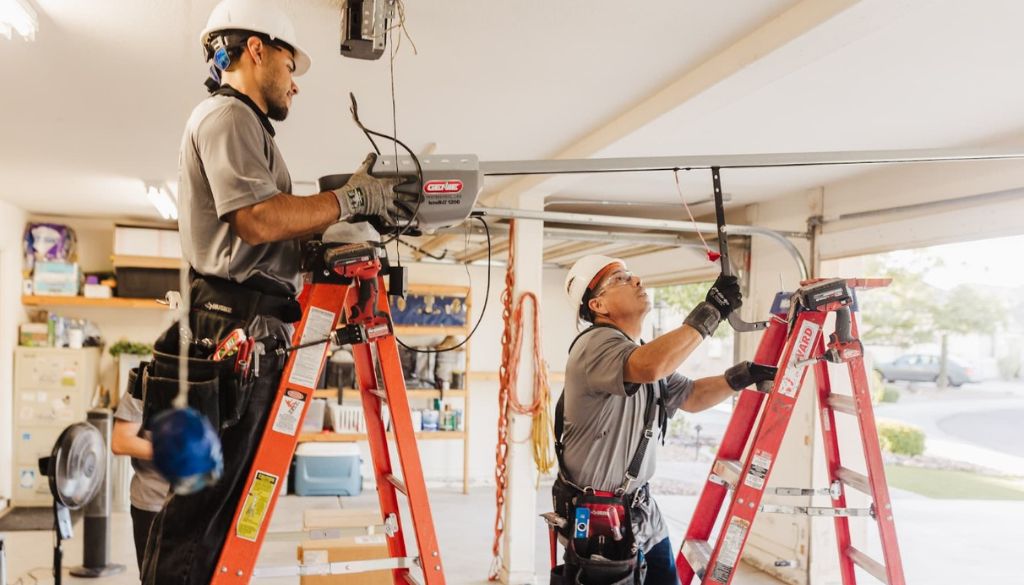
A door that suddenly feels unusually heavy, will not lift, or only opens a short distance may have a spring-related problem. A door that closes too quickly or seems hard to control also deserves immediate attention. If the opener hums or strains but the door barely moves, do not keep pressing the button. The opener may be responding to a problem elsewhere in the system, and repeated attempts can worsen damage.
Uneven travel is another concern. If one side of the door appears to rise faster than the other, or if the door seems cocked in the opening, stop using it until it is inspected. That behavior may involve springs, garage door cables, tracks, rollers, or a combination of parts. From the owner’s point of view, the exact cause matters less than the safety decision. A door that does not travel squarely is not behaving normally.
Noise also deserves attention, although it needs judgment. Garage doors are not silent machines. Rollers move, hinges flex, and openers make mechanical sounds. The warning signs are changes: a sharp new bang, a scraping sound, a sudden grinding, or a repeated pop that was not there before. A spring issue can be part of that noise pattern, but so can a roller, cable, bracket, or track problem. Treat new sounds as information, not as a reason to start adjusting parts.
Visible clues can be useful. If a spring looks separated, distorted, or clearly different from its matching spring on a two-spring system, that is a reason to stop and call for service. If cables look loose, frayed, off-position, or uneven from side to side, do not operate the door. If the door is stuck open, do not stand under it or attempt to pull it down by force. The safer response is to secure the area and arrange professional garage door repair.
A sensible inspection routine for owners
A good inspection routine is short enough that you will actually do it and careful enough to catch obvious problems. It should not require special tools. The point is to notice changes before they become emergencies.
Use this routine when the door is operating normally and the area is clear:
That fifth step belongs in a torsion spring guide because safety systems and mechanical condition overlap in real life. A garage door can have more than one issue at the same time. I have seen owners focus so hard on a suspected spring problem that they ignore misaligned sensors, and I have seen the reverse, where a sensor issue distracts from a door that is plainly not moving correctly. The safest inspection looks at the door as a system.
The role of the opener during spring inspection
Many homeowners judge the door by whether the garage door opener can make it move. That is understandable, but it is not enough. An opener is a control and drive device. It is not a cure for a door that is out of balance, binding, or mechanically compromised.
If you press the remote and the opener starts, stops, reverses, or flashes lights, the cause may not be the opener itself. The safety sensors may be blocked or misaligned. The door may be meeting resistance. The tracks may have an obstruction. The spring system may not be helping the door move as it should. Garage door troubleshooting works best when you avoid guessing too quickly.
The safety reversal system is especially important. Federal safety requirements for automatic residential garage door openers include entrapment protection such as a photoelectric “electric eye” sensor or an equivalent system. The reason is straightforward: a closing garage door can injure or trap a person, and documented fatal entrapment incidents are part of why these protections matter. A properly functioning opener should reverse when closing onto an obstruction. If it does not, the problem needs attention.
Children should be taught that a garage door is not a toy, not a ride, and not something to race under. Remote controls should stay out of their reach. That advice may sound basic until you have watched a child treat the moving door like a game. The spring system, opener, sensors, and door weight all become irrelevant in the worst possible way if someone is in the wrong place at the wrong time.
What not to do around torsion springs
The most important part of torsion spring inspection is restraint. Homeowners can make a dangerous situation worse by trying to “just tighten something” or “just get the door closed.” Springs, cables, and brackets work together under load. A part that looks like ordinary hardware may be holding back serious force.
Do not remove, loosen, or adjust spring-related hardware during an inspection. Do not place your face or hands close to the spring assembly to get a better look. Do not pull on cables. Do not try to force a stuck door open or closed. Do not keep cycling the opener when the door is not moving normally.
There is also a temptation to use garage door lubrication as a universal fix. Lubrication has a place in garage door maintenance, but it is not a repair for a damaged spring, a compromised cable, a bent track, or a failing safety device. A quieter door is not automatically a safer door. If lubrication changes the sound but the door still moves unevenly, hesitates, or feels wrong, the underlying issue remains.
A professional technician brings more than tools. They bring a process for controlling the door, evaluating the spring system, checking cables and hardware, and working safely at height. That matters because garage door installation and repair often happen in awkward positions around overhead parts. A task that looks simple in a short video can be very different in a real garage with poor lighting, stored items near the tracks, a vehicle in the way, and a door that is not stable.
When a spring issue is really a system issue
Owners often ask for “spring repair” because the symptom points that way. Sometimes they are right. Other times the spring is only one piece of the story. A door that binds in the track can strain the lifting system. Worn or damaged garage door rollers can create rough travel. Cable problems can make the door sit unevenly. Sensor issues can stop the opener from closing the door even when the spring system is not the main concern.
That is why a good garage door inspection does not stop at the torsion springs. The door should be observed as it moves. The tracks should look reasonably aligned and clear. Rollers should follow the tracks without obvious jumping or dragging. Cables should appear even and properly positioned. The opener should respond predictably. The sensors should be clean, aligned, and functional. The door should not slam, lurch, or twist.
Garage door balance is a useful concept here, but homeowners should be cautious about testing it if they are not familiar with the door or if anything already seems wrong. The general idea is that the door and spring system should share the work in a controlled way. If the opener is doing all the struggling, the system is not healthy. If the door will not stay controlled, the system is not safe. Rather than experimenting with a questionable door, call for service and describe the symptoms clearly.
The best service calls often start with specific observations. “The door opens about a foot and stops” is more useful than “the opener is broken.” “The left side seems lower than the right” is more useful than “it sounds weird.” “The sensors are clear, but the door reverses every time it starts to close” gives a technician a better starting point. Good notes save time and reduce guesswork.
Monthly safety checks are not optional housekeeping
Some maintenance tasks are about convenience. Safety reversal testing is different. The Consumer Product Safety Commission has warned that non-reversing garage door openers are a hazard, and safety reversal systems should be tested monthly. If the door fails to reverse, the opener should be adjusted according to the owner’s manual or inspected by a professional.
That monthly rhythm is easy to forget, so attach it to something you already do: changing an HVAC filter, paying a utility bill, or checking smoke alarms. The exact pairing matters less than the habit. A garage door system can drift out of proper operation over time. Sensors can be bumped. Stored items can block the sensor path. Hardware can loosen. Rollers and tracks can wear. Springs age through use. Monthly attention catches some of those changes while they are still manageable.
The photoelectric sensors deserve a quick look even when the door seems fine. They professional garage door repair Gold Coast are usually mounted low near the sides of the door opening. They should not be blocked by boxes, bikes, trash cans, tools, or leaves. If the sensor brackets are bent or the lenses are dirty, the opener may refuse to close the door or may reverse unexpectedly. That kind of garage door troubleshooting is simple, but it should still be done with respect for the moving door. Keep your body out of the door path and never treat a sensor bypass as a solution.
A door that fails a safety test should not be treated as “good enough for now.” The automatic function should not be used until the problem is corrected. If the owner’s manual provides a safe adjustment procedure, follow it exactly. If not, or if the door has other symptoms, arrange professional service.
Inspection after a change in behavior
A torsion spring inspection is especially important after the door does something unusual. Maybe it made a loud sound overnight. Maybe it opened halfway and stopped. Maybe the opener pulled but the door stayed shut. Maybe the door closed harder than normal. These moments are not annoyances to push through. They are signals.
The first response should be to stop operating the door. Look from a safe distance. Check whether the door is sitting level. See whether cables appear uneven. Look for obvious obstructions in the tracks. Confirm that the sensors are not blocked. Listen for the opener, but do not keep cycling it. If the door is stuck in an unsafe position, keep people away from it.
There is a practical reason for restraint. A garage door problem can cascade. A spring issue can lead to cable problems. A track issue can affect rollers. A struggling opener can be damaged by repeated attempts to move a door that is not cooperating. What begins as a repair can become a garage door replacement discussion if major parts are bent, cracked, or overstressed. Not every failure becomes that serious, but forcing the system rarely makes the invoice smaller.
Owners sometimes try to disconnect the opener and operate the door by hand when something goes wrong. That can be reasonable in some normal circumstances, but it can be risky if the door is heavy, unbalanced, crooked, or stuck. If you are not certain the door can be controlled safely, do not attempt it. A door that drops or shifts can injure someone or damage property.
What to tell a garage door professional
When you call for garage door repair, the details you provide help the technician prepare. You do not need to diagnose the torsion springs. You need to describe what happened, what you observed, and whether the door is open, closed, or stuck.
Give the service company a clear picture:
Those details matter for safety as much as scheduling. A technician approaching a door stuck partly open will think differently than one arriving for routine garage door maintenance. If there are children in the home, pets in the garage, or a vehicle trapped inside, say so. The more accurate the information, the better the service visit can be planned.
Maintenance that supports spring life without pretending to service springs
Homeowners can support the overall door system without adjusting torsion springs. Keep the tracks clear of stored items. Watch for rollers that no longer move smoothly. Pay attention to door movement before the opener starts sounding strained. Keep sensor areas clean and unobstructed. Schedule garage door maintenance when operation changes, not just after a full breakdown.
Garage door lubrication can be useful when done according to the door and opener manufacturer’s guidance, but it should be treated as maintenance, not diagnosis. If a door is noisy because ordinary moving points need attention, lubrication may help. If a door is noisy because a component is failing, lubrication may only make the failure quieter for a short time. That is not a win.
Environmental conditions also affect how often owners notice problems. A garage used as a workshop may have dust around tracks and sensors. A family garage with bikes, bins, and sports equipment may have frequent sensor bumps. A door used many times a day will show wear differently from a door opened once in the morning and once at night. The inspection habit should match the way the door is used.
During a new garage door installation, ask the installer to walk you through safe owner-level checks. A good handoff should include the opener safety reversal test, sensor location, basic visual inspection points, and when to call for service. Owners should also keep the opener manual accessible. When a safety system needs adjustment, the manual matters. Guessing at controls on the opener head while standing on a ladder is not a maintenance plan.
Repair, replacement, and the judgment between them
Not every spring problem means the entire door needs replacement. Not every old door is worth repairing indefinitely. The right decision depends on the condition of the door sections, tracks, rollers, cables, opener, safety systems, and hardware, not just the spring itself.
Garage door replacement becomes more likely when the door has multiple failing components, damaged sections, poor movement, outdated or unreliable safety features, or repair costs that no longer make sense against the condition of the system. On the other hand, a door that is structurally sound and otherwise operating well may only need targeted professional service. The important point is to evaluate the whole system.
Be wary of making the decision based only on the first symptom. A door that will not open may make an owner fear the worst, but the repair may be limited. A door that still opens may look acceptable, but if it moves unevenly, fails safety reversal checks, or has visible cable concerns, it may be less safe than it appears. Function is not the same as condition.
A professional inspection should explain the findings in plain language. If you are told a part needs replacement, ask what symptom or condition supports that recommendation. If a safety device is not working, ask whether the opener can be adjusted according to its manual or whether the equipment needs service. A good repair conversation does not rely on pressure. It connects observed problems to practical options.
A safer habit for long-term ownership
The best garage door owners are not the ones who know how to take everything apart. They are the ones who notice changes early, respect the force in the system, and keep safety devices working. Torsion springs are central to how the door moves, but they are not a homeowner adjustment point. Your role is to inspect visually, listen carefully, test safety reversal monthly, keep sensors unobstructed, and stop using the door when behavior changes.
That approach prevents many bad decisions. It keeps a noisy door from becoming an ignored door. It keeps an opener problem from being blamed for every symptom. It keeps children and pets away from a moving system that deserves caution. It also gives a garage door professional better information when service is needed.
A garage door is one of the largest moving objects in a home. Treat it that way. Give the torsion springs a regular look, give the safety systems a monthly test, and give yourself permission to call for help before the door forces the issue.