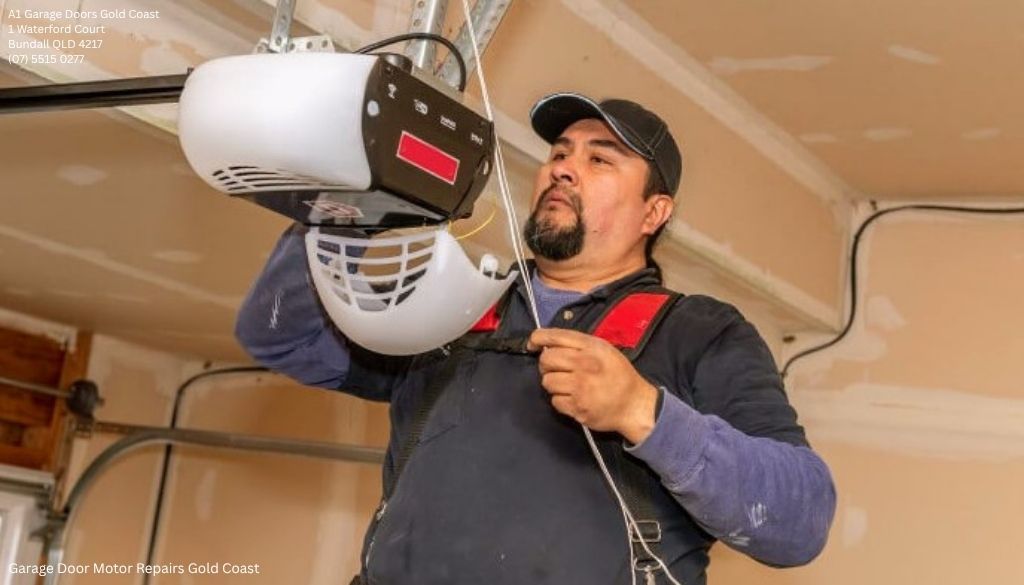
Garage Door Sensors Troubleshooting for Automatic Openers
A garage door opener feels ordinary until it fails at the wrong moment. A door starts down, stops, reverses, or refuses to close unless the wall button is held. Someone waves a foot near the threshold and nothing happens. A family gets used to stepping under a moving door because “it has always worked.” That is exactly where garage door sensors deserve more respect than they usually get.
For residential automatic garage door openers in the United States, entrapment protection is not an optional convenience. Federal safety requirements cover these openers, and automatic residential systems must include protection such as a photoelectric “electric eye” sensor or an equivalent safety system. The point is simple: a closing garage door must not trap a person, child, pet, or object beneath it.
When a garage door sensor acts up, the right response is not to defeat it, tape it in place, or treat it as a nuisance. A sensor problem is a garage door safety problem first and a convenience problem second. Good garage door troubleshooting starts with that mindset.
What garage door sensors are supposed to do
Most homeowners think of garage door sensors as the small devices mounted near the bottom of the garage door opening. In everyday trade language, those are often called photo eyes, electric eyes, or garage door sensors. Their job is to detect an obstruction in the door’s path and prevent the automatic opener from closing the door onto it.
A properly functioning garage door opener should reverse when the closing door meets an obstruction. The safety reversal system is one of the most important protections on the entire installation. It is also one of the easiest to neglect, because it sits quietly in the background until something is wrong.
The federal safety rules came from a real hazard, not from paperwork for its own sake. Safety regulators have documented fatal entrapment incidents involving automatic garage doors. That history is why residential automatic openers are required to have entrapment protection, and why routine testing matters long after the original garage door installation is complete.
It is worth separating two ideas that often get mixed together. The garage door opener provides powered movement. The door system itself includes the panels, garage door tracks, garage door rollers, garage door cables, garage door springs, and, on many doors, torsion springs. The sensor system does not make a heavy or poorly balanced door safe by itself. It is part of a wider safety system, and it depends on the rest of the door being in serviceable condition.
A door with worn rollers, damaged tracks, cable problems, spring issues, or poor garage door balance can behave unpredictably. A sensor may stop the opener from closing onto an obstruction, but it does not repair the mechanical door. That is why sensor troubleshooting should sit inside a broader garage door inspection, not replace one.
Why sensor problems should never be ignored
A sensor fault can be tempting to work around. People are busy. It is raining. The car is outside. The kids are waiting. The opener will not close, and someone discovers that holding the wall control makes the door go down. That may get the door closed for the moment, but it does not solve the safety issue.
A non-reversing or improperly reversing garage door opener is a hazard. Safety agencies have warned homeowners about openers that fail to reverse, and their guidance is direct: the safety reversal system should be tested monthly. If the door fails to reverse, it should be adjusted according to the owner’s manual or inspected by a professional.
That monthly rhythm matters because garage doors live in rough conditions. They operate in dusty garages, humid spaces, hot summers, freezing winters, and tight areas where tools, bicycles, boxes, and yard equipment get pushed against the opening. Even when no one has touched the opener, daily use can reveal a marginal installation or a developing mechanical fault.
The most dangerous pattern I see in service calls is normalization. A homeowner says, “It has been doing that for a while,” and then describes a door that reverses randomly, closes only on the second try, or ignores an obstruction test. The first week, it felt like an annoyance. By the third month, it became part of the routine. Garage door safety erodes quietly that way.
Remote controls are another part of the safety picture. Children should be taught that a garage door is not a toy, and remotes should be kept out of their reach. Sensors and reversal systems reduce risk, but they are not a license to let children play with a moving door. The safest garage door is the one that works correctly and is treated with caution.
The first question: is this a sensor issue or a door issue?
Not every problem that looks like a sensor problem starts at the sensors. An automatic opener is only one part of the system. If the door binds in the tracks, has damaged rollers, carries uneven tension, or is affected by a spring or cable issue, the opener may stop or reverse because the door is not moving properly. That can mimic a safety system fault.
Garage door troubleshooting should begin with observation rather than guesswork. Watch what the door does from a safe position. Does it start to close and immediately reverse? Does it move partway and struggle? Does it close normally by hand but not with the opener? Does it fail a reversal test? Those details matter.
A door that moves roughly may need garage door repair unrelated to the sensors. A door that is out of balance may need professional attention, especially where garage door springs or torsion springs are involved. Springs and cables carry significant stored force, and they are not casual do-it-yourself parts. If you suspect a spring, cable, or balance issue, the safer and more practical decision is to affordable garage door repairs Gold Coast stop operating the door and schedule service.
A sensor issue usually points to the entrapment protection system. The opener may refuse to close automatically because it cannot confirm the doorway is clear, or the system may fail to react properly during a safety test. Either condition deserves attention.
The key is not to force a diagnosis too early. A clean, aligned, unobstructed sensor path matters, but so does a door that runs smoothly in its tracks. Good garage door maintenance considers both.
A safe, basic troubleshooting sequence
The safest homeowner-level troubleshooting is visual, cautious, and limited. It does not require opening the opener motor housing, altering wiring, defeating a safety feature, or adjusting springs. If you reach a point where the next step feels like “making it close anyway,” stop. That is the wrong direction.
Use this short sequence when a residential automatic garage door opener will not close properly or when you suspect the garage door sensors are involved:
That sequence is intentionally conservative. It focuses on conditions a homeowner can observe without taking on mechanical risk. Many service calls are resolved by finding a trash bin, rake handle, storage tote, or shifted object near the opening. Other calls reveal that the sensor was bumped by a broom, a child’s bike, or a car tire brushing the bracket. Those are straightforward conditions, but the safety test afterward is what confirms the system is doing its job.
The owner’s manual deserves more attention than it usually gets. Different openers use different indicators, controls, and adjustment procedures. A professional technician may know common patterns across brands, but a homeowner should not guess at safety adjustments. If the manual gives a specific testing and adjustment method, use it. If it does not make sense or the result is uncertain, call for service.
Monthly reversal testing is not optional maintenance
The most important habit with any automatic residential garage door opener is monthly testing of the safety reversal system. This is not busywork. Safety authorities recommend monthly testing because a door that fails to reverse can create an entrapment hazard.
A monthly test also gives you a baseline. When you test regularly, you notice changes early. The door that used to reverse smoothly but now hesitates, the opener that seems strained, the sensor that only works after being nudged, these small changes are early warnings. They are easier to correct before the system fails completely or someone gets hurt.
Garage door maintenance often gets reduced to a quick spray of lubricant. Garage door lubrication has its place when performed according to the door and opener manufacturer’s guidance, but lubrication is not the same as safety testing. A quiet door is not automatically a safe door. A door can run smoothly and still have a failed or bypassed sensor system. A door can sound fine and still fail to reverse properly.
A proper garage door inspection should include the photoelectric sensors or equivalent entrapment protection, the door movement, the opener response, the condition of visible hardware, and the general behavior of the system. The goal is not to turn every homeowner into a technician. The goal is to catch obvious safety problems and know when professional garage door repair is warranted.
One practical way to remember the test is to tie it to a recurring household task. Test the opener when you change an HVAC filter, check smoke alarms, or pay monthly home bills. It takes only a short time, but it keeps the safety system from becoming invisible.
When the door reverses unexpectedly
An opener that reverses when there is no obvious obstruction is one of the most common sensor-related complaints. The door starts down, reaches a certain point, then heads back up. Sometimes it happens every time. Sometimes it only happens in the afternoon, after cleaning the garage, or after someone parks close to the opening.
Do not assume the opener is “too sensitive” and needs to be forced. Unexpected reversal can be the opener responding to something it interprets as unsafe. That may be an issue with the sensor path, the condition or position of the sensors, or the door’s mechanical movement. The door may also be encountering resistance unrelated to the sensor system.
Start with the opening itself. The bottom area of a garage is where clutter accumulates. A cardboard box does not have to block the whole doorway to interfere with a low-mounted sensor path. A shovel handle, extension cord, trash can, garden sprayer, or holiday decoration bin can sit just far enough into the opening to cause trouble. Clearing the area is not glamorous, but it is often the fastest fix.
Next, look at the sensors as installed devices, not just as accessories. Are they still mounted where they belong? Are they aimed across the opening? Have the brackets been bent? Did someone bump one during garage door replacement work, storage cleanup, or a recent garage door installation? A sensor that is present but no longer properly positioned may keep the opener from closing.
Then consider the door movement. If the door shakes, rubs, or drags, the opener may be reacting to resistance. The cause could involve garage door tracks, garage door rollers, garage door cables, or spring tension. A sensor cleaning will not solve a mechanical door problem. If the door does not move in a controlled, balanced way, schedule a professional inspection.
When the door does not reverse during a safety test
A door that fails to reverse during a safety test should be treated as a serious defect. Safety guidance is clear that the system should be tested monthly, and if the door fails to reverse, it should be adjusted according to the owner’s manual or inspected by a professional.
This is not the time to experiment randomly with opener settings. The safety reversal system exists because a closing garage door can injure or trap someone. If the opener does not reverse as it should, continued automatic operation creates unnecessary risk.
A professional garage door technician will look at the opener and the door as a system. The issue may involve the entrapment protection device, the opener settings, the physical door, or more than one condition at the same time. Good technicians do not simply make the door close. They verify that it closes, opens, and reverses safely.
If the opener is older, replacement may be the responsible recommendation. Garage door replacement usually refers to the door itself, but opener replacement is sometimes part of making the system safe and compliant. Since automatic residential openers are required to include entrapment protection such as photoelectric sensors or an equivalent system, an opener that cannot provide reliable safety performance does not deserve endless temporary fixes.
When sensors are missing, bypassed, or treated as optional
Every so often, a homeowner discovers that the garage door sensors are missing, disconnected, blocked intentionally, or mounted in a way that defeats their purpose. Sometimes this happens after a poor repair. Sometimes it dates back to an old installation. Sometimes someone got tired of nuisance reversals and “solved” the problem by bypassing the safety device.
That is not a repair. It is the removal of a required safety protection.
For residential automatic garage door openers in the United States, entrapment protection such as a photoelectric electric eye or equivalent safety system is required. A garage door opener that operates without proper entrapment protection should not be treated as acceptable. The door may still move, but movement alone is not the standard. Safe operation is the standard.
The most troubling part is that bypassed sensors often go unnoticed by the next occupant. A home is sold, a tenant moves in, a family member inherits the property, and the door works with the remote. No one asks whether the system reverses properly. That is why a garage door inspection is a sensible step during move-in, after remodeling, and after any garage work that may have disturbed the opener or door.
If sensors are missing or defeated, arrange proper service. Depending on the opener and door condition, that may mean repair, correct sensor installation, opener replacement, or broader garage door repair. The right answer depends on the equipment, but ignoring the condition is not a defensible option.
The role of the opener manual
The owner’s manual is not just paperwork that came in the box. It is the correct reference for testing, adjustment, and normal operation of a particular garage door opener. Safety agencies advise that if a door fails to reverse, it should be adjusted according to the owner’s manual or inspected by a professional. That wording matters because openers are not all identical.
Some homeowners expect a universal answer: turn this screw, press that button, reset this feature. That kind of advice can be risky when the subject is entrapment protection. A setting that is appropriate for one opener may not apply to another. A symptom that looks like a sensor fault may actually come from door resistance. A door that seems to need an opener adjustment may really need mechanical repair.
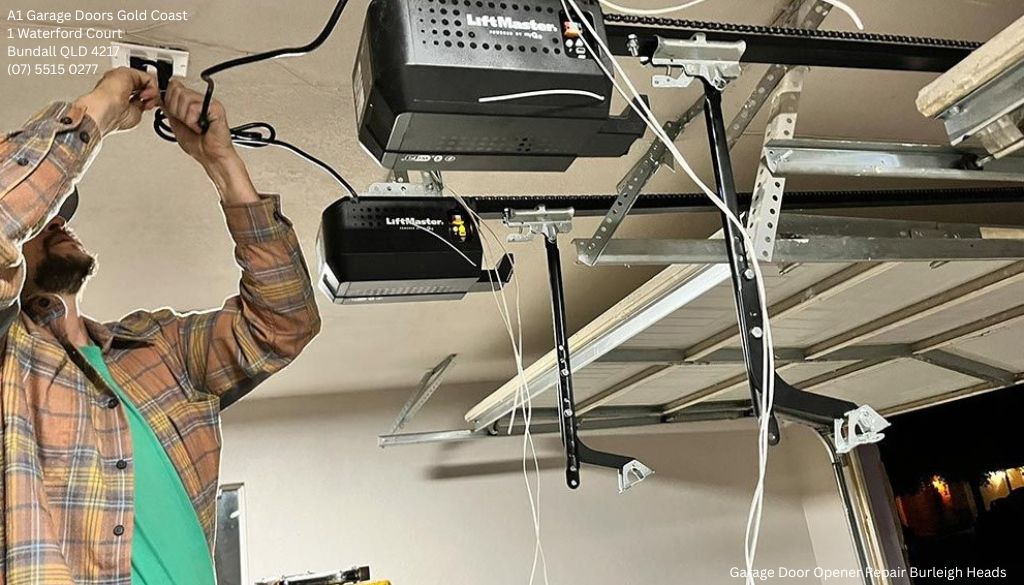
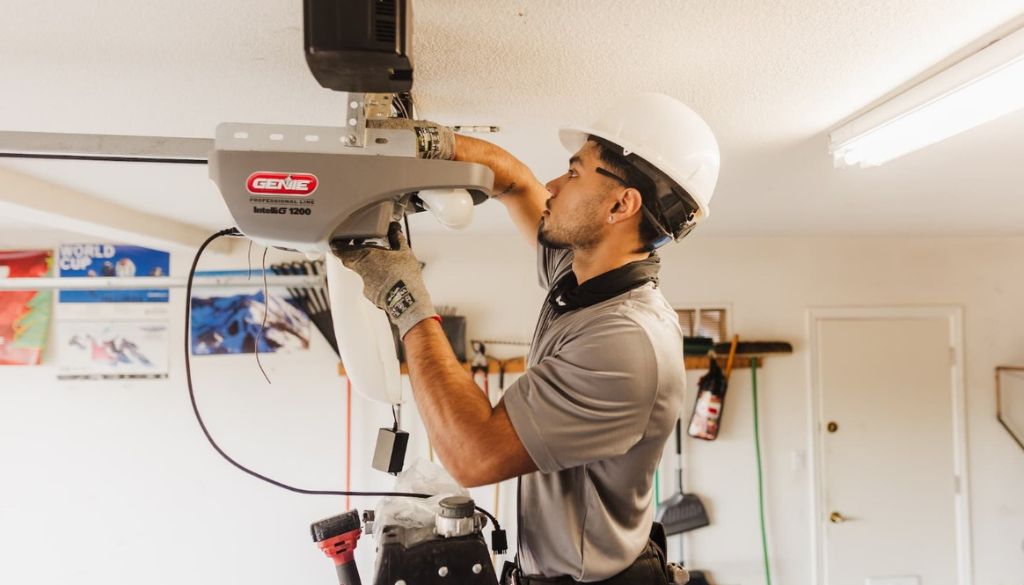
A manual also helps identify what the manufacturer intended for routine testing. If the manual is missing, many manufacturers provide documentation by model number, but avoid guessing if you cannot confirm the procedure. When the safety system is involved, uncertainty is a good reason to call a professional.
Professional repair versus homeowner troubleshooting
There is a reasonable boundary between what a homeowner can do and what belongs to a trained technician. Clearing clutter, checking that sensors are visibly present, looking for obvious damage, and performing the monthly safety test are appropriate homeowner tasks. Working on springs, cables, opener internals, ceiling-mounted equipment, or uncertain safety adjustments is different.
Installation and repair work around garage doors can involve physical hazards. Technicians may work at ceiling height, in cramped spaces, with hand tools, and in awkward postures. That risk increases when someone is standing on a ladder near a door, reaching overhead, handling equipment, or trying to diagnose a problem while the system is powered. Careful, staged work practices are not overkill. They are part of doing the job safely.
A professional garage door repair visit should not focus only on the sensor that triggered the call. The technician should consider garage door tracks, rollers, cables, springs, balance, opener operation, and the safety devices. A sensor fault can be the symptom that brings attention to an aging system.
There is also a cost trade-off. A minor adjustment or sensor correction may be inexpensive compared with replacing an opener or door. But repeated service calls on equipment that cannot reliably meet safety expectations may be false economy. At some point, garage door replacement or opener replacement becomes less about convenience and more about dependable safe operation.
Red flags that call for service
Some conditions are not worth nursing along. When a safety system is inconsistent, the homeowner’s job is to recognize the risk and stop treating the opener as reliable. The following situations justify professional inspection rather than repeated trial and error:
These are not cosmetic concerns. They involve the movement and safety of a heavy door. If the door is your main household entry, it may be inconvenient to pause use, but inconvenience is still better than operating a system that may not protect someone in the doorway.
Sensor troubleshooting after installation or replacement work
Garage door installation and garage door opener replacement are moments when sensor problems often appear. The equipment may be new, but the installation still has to be correct. A sensor mounted loosely, aimed poorly, or placed where stored items routinely block it will create trouble from the beginning.
After installation, the door should be tested for safe operation, including the reversal system. That test is not a ceremonial final step. It confirms that the opener, sensors, and door work together. If the door closes but the safety system does not respond correctly, the installation is not finished.
The same applies after garage door replacement. A new door may change the way the system moves. Tracks, rollers, cables, springs, and opener settings all need to work as a complete assembly. A replacement door connected to an existing opener should still meet the safety expectations for automatic operation. If there is any doubt, have the installer verify the entrapment protection and reversal function before putting the door back into daily use.
Children, remotes, and daily habits
Garage door sensors reduce risk, but household habits still matter. Children should be taught that the garage door is not play equipment. They should not run under a moving door, race it, hang from it, or operate the remote casually. Remote controls should be kept out of children’s reach.
The reason is practical. Safety systems are designed to prevent entrapment and reduce injury risk, but no device should be treated as a challenge. A child may not understand how quickly a door can move or how heavy it is. A pet may dart into the opening. An adult may be carrying groceries and fail to notice a closing door. The safest habit is to keep the doorway clear and operate the door only when the area is visible and free of people or objects.
Homeowners sometimes say, “The sensors will stop it.” A better rule is, “The doorway should be clear before the opener runs.” Sensors are a backup safety system, not a substitute for attention.
How sensor care fits into whole-door maintenance
Garage door sensors belong in the same maintenance conversation as lubrication, balance, tracks, rollers, cables, and springs. A door system works best when each part does its job without being forced to compensate for another failing part.
Garage door lubrication can reduce wear and noise where the manufacturer recommends it, but lubrication should never be sprayed blindly into sensors, opener controls, or electrical components. Garage door balance affects how hard the opener must work. Tracks guide the rollers, and rollers affect smooth travel. Cables and springs carry critical load. Sensors monitor the doorway for entrapment protection. The opener coordinates movement. None of these parts should be viewed in isolation.
A disciplined maintenance routine is simple: observe the door during operation, keep the opening clear, test the reversal system monthly, follow the owner’s manual, and schedule service when something changes. That routine catches more problems than occasional emergency attention.
A well-maintained garage door should not require tricks. You should not have to hold your breath, press the remote three times, kick a sensor bracket, or shoulder the door to get it moving. Those habits are signals that maintenance has slipped into workaround territory.
When replacement is the safer choice
Garage door replacement is not always necessary when sensors misbehave. Many problems are localized and repairable. But replacement enters the discussion when the larger system cannot be made reliable, when the door is mechanically compromised, or when the opener cannot provide proper entrapment protection.
The decision should be based on safety and function, not just age or appearance. A good-looking door with poor balance, damaged hardware, or unreliable safety reversal is not a good system. A newer opener connected to a neglected door can still struggle. A repaired sensor on a door with serious mechanical faults may only solve one piece of the risk.
The professional judgment here is important. A technician may recommend adjusting the system, replacing sensor components, repairing tracks or rollers, addressing springs, or replacing the opener. In other cases, broader replacement makes more sense. The homeowner’s responsibility is to ask whether the final result will be safe, testable, and dependable, not merely operational.
A practical standard for a safe automatic garage door
A safe residential automatic garage door opener should have working entrapment protection, reverse properly when required, and operate a door that moves smoothly and predictably. The safety reversal system should be tested monthly. If the door fails that test, it should be adjusted according to the owner’s manual or inspected by a professional. Children should understand garage door safety, and remotes should stay out of their reach.
That standard is not complicated, but it does require consistency. Sensors get bumped. Door hardware wears. Openers age. Garages fill with clutter. The system that worked last year still needs attention this month.
Treat garage door sensors as safety equipment, not accessories. When they interrupt the door, they may be doing exactly what they were installed to do. When they fail to respond, they may be warning you that the door is no longer safe to trust. Either way, careful garage door troubleshooting, routine inspection, and timely professional repair protect the people who use the door every day.